
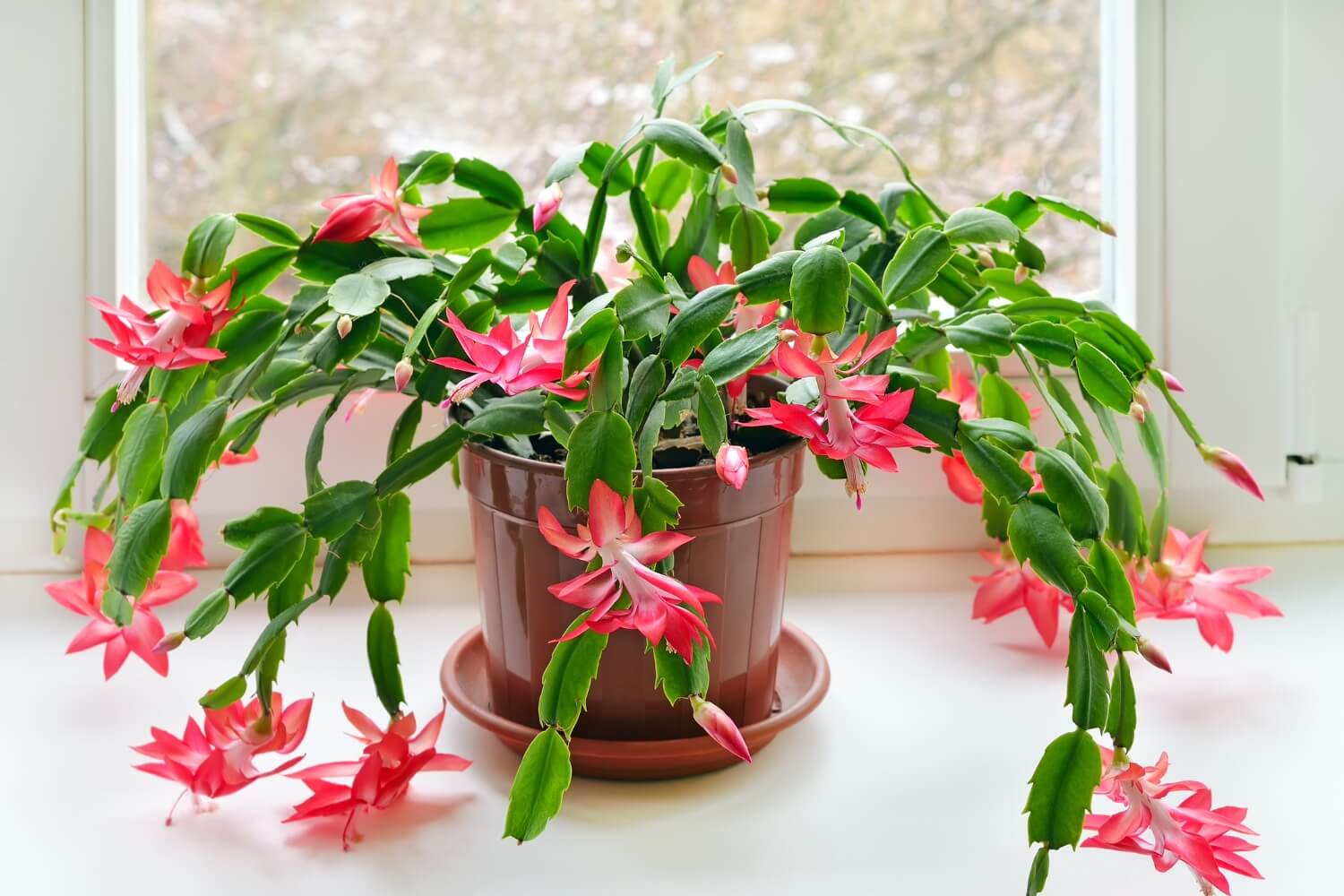
The Christmas cactus brings a splash of vibrant color to homes during the holiday season with its stunning flowers. Despite its name, this tropical plant isn’t a true cactus and requires different care than its desert-dwelling cousins. Native to the coastal mountains of southeastern Brazil, the Christmas cactus thrives in humid environments with indirect light – quite unlike the harsh, arid conditions favored by most cacti.
With its arching stems made up of flat, glossy segments and colorful blooms in shades of pink, red, purple, and white, the Christmas cactus makes for an eye-catching houseplant year-round. When given proper care, these long-lived plants can be passed down through generations, blooming faithfully each winter.
| Scientific Name | Schlumbergera x buckleyi |
| Common Name | Christmas Cactus |
| Plant Family | Cactaceae |
| Plant Type | Epiphytic succulent |
| Growth Habit | Trailing, pendulous |
| Hardiness Zones | 10-12 |
| Soil Type & pH | Well-draining, slightly acidic (pH 5.5-6.2) |
| Sunlight | Bright, indirect light |
| Toxicity | Non-toxic to humans and pets |
| Mature Size | 12-24 inches tall, 12-24 inches wide |
| Bloom Time | Late fall to mid-winter |
Types of Christmas Cactus
While we commonly refer to these plants as Christmas cactus, there are actually several closely related species that bloom at different times:
- Thanksgiving Cactus (Schlumbergera truncata) – Often mislabeled as Christmas cactus, this species typically blooms in late fall, around Thanksgiving. It has pointed, claw-like projections on the edges of its segments.
- Christmas Cactus (Schlumbergera x buckleyi) – A hybrid species that blooms in mid-winter, around Christmas. Its segments have rounded edges.
- Easter Cactus (Hatiora gaertneri) – This species blooms in spring, around Easter. It has more rounded segments and star-shaped flowers.
Each type has similar care requirements, but knowing which one you have can help you understand its natural blooming cycle.
Caring for Christmas Cactus
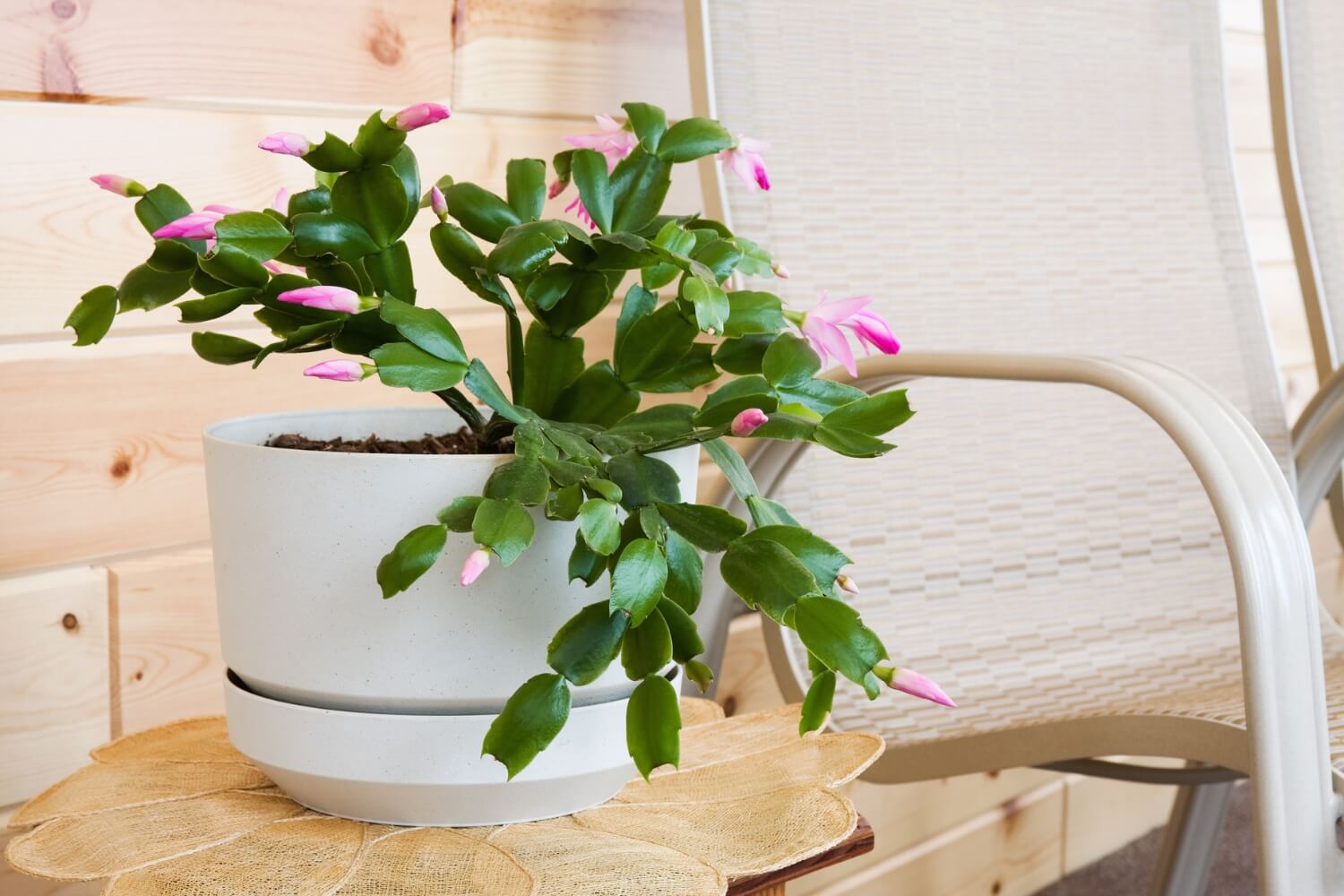
Christmas cacti thrive in bright, indirect light with high humidity and consistent moisture. They prefer temperatures between 60-70°F and benefit from regular fertilization during the growing season. Proper care includes providing well-draining soil, avoiding overwatering, and adjusting light and temperature to encourage blooming.
Light Conditions
Christmas cactus thrive in bright, indirect light. An east-facing window often provides the ideal amount of light – enough to keep the plant healthy without risking leaf scorch from direct sun exposure. In their natural habitat, these plants grow in the dappled shade of tree canopies, so they’re adapted to filtered light conditions.
If you notice the segments turning reddish, it’s a sign the plant is receiving too much direct sunlight. On the other hand, insufficient light can result in pale, limp growth and reduced flowering.
Temperature & Humidity
These tropical plants prefer temperatures between 60-70°F (15-21°C). They can tolerate slightly cooler temperatures at night, but prolonged exposure to temperatures below 50°F (10°C) can damage the plant. Avoid placing your Christmas cactus near drafty windows or heating vents, as sudden temperature fluctuations can cause bud drop.
Christmas cactus thrive in humid environments, ideally with humidity levels between 50-60%. If your home is dry, especially during winter when heating systems are running, consider using a humidity tray or placing a small humidifier near the plant. Grouping plants together can also help create a more humid microclimate.
Watering Needs
Proper watering is crucial for Christmas cactus health. While they need more water than desert cacti, they’re still susceptible to root rot if overwatered. Water your plant when the top inch of soil feels dry to the touch. During the active growing season (spring and summer), this might mean watering once a week.
In fall and winter, reduce watering frequency to allow the plant to enter its rest period. When you water, do so thoroughly until water runs out of the drainage holes. Empty the saucer promptly to prevent the plant from sitting in water. Christmas cactus are more tolerant of underwatering than overwatering, so err on the side of caution if you’re unsure.
Soil & Compost
Christmas cactus requires well-draining soil to prevent water from pooling around the roots. A mix designed for succulents or cacti works well, or you can create your own by combining equal parts potting soil, perlite, and orchid bark. This combination provides the drainage these plants need while retaining enough moisture to keep the roots happy.
The ideal pH range for Christmas cactus is slightly acidic, between 5.5 and 6.2. If you’re unsure about your soil’s pH, you can test it using a home soil testing kit available at most garden centers.
Fertilizer
Feed your Christmas cactus monthly during its active growing period (spring and summer) with a balanced, water-soluble fertilizer diluted to half strength. Choose a fertilizer with equal parts nitrogen, phosphorus, and potassium (such as a 10-10-10 formula). Stop fertilizing in late summer to prepare the plant for its blooming cycle.
As fall approaches and you’re preparing your plant for blooming, switch to a fertilizer higher in potassium and phosphorus but lower in nitrogen. This change in nutrients helps promote flower bud formation. Always water the plant before applying fertilizer to prevent root burn.
How to Propagate Christmas Cactus
Propagating Christmas cactus is a straightforward process that allows you to create new plants from your existing ones. The most common method is through stem cuttings. Here’s how to do it:
- Choose a healthy stem segment with 3-5 sections. Using clean, sharp scissors or your fingers, gently twist the segment off at a joint.
- Allow the cutting to dry for a few hours or overnight. This helps the cut end callus over, reducing the risk of rot.
- Fill a small pot with a well-draining cactus or succulent mix.
- Insert the cut end of the segment about an inch deep into the soil. You can dip the end in rooting hormone first if desired, but it’s not necessary.
- Water lightly and place the pot in a bright location out of direct sunlight.
- Keep the soil lightly moist but not waterlogged. Roots should develop within a few weeks.
- Once the cutting shows signs of new growth, you can begin caring for it as you would a mature plant.
You can also root christmas cactus cuttings in water. Simply place the cut end in a glass of water, changing the water every few days. Once roots develop, transfer the cutting to soil.
Repotting Christmas Cactus

Christmas cactus actually prefer to be slightly pot-bound, so they don’t need frequent repotting. You’ll typically only need to repot every 3-4 years, or when you notice roots growing out of the drainage holes.
When it’s time to repot, choose a container only slightly larger than the current one – about 1-2 inches wider in diameter. Too large a pot can lead to overwatering issues. Ensure the new pot has adequate drainage holes.
The best time to repot is in spring, after the plant has finished blooming. Gently remove the plant from its current pot, shake off excess soil, and inspect the roots. Trim away any dead or rotting roots with clean, sharp scissors.
Place fresh potting mix in the new container, position your plant at the same depth it was growing before, and fill in around the roots with more soil. Water lightly and place the plant in a shaded area for a few days to recover from the stress of repotting before returning it to its usual spot.
Overwintering
Christmas cactus are not cold-hardy and must be protected from frost. If you’ve been keeping your plant outdoors during summer, bring it inside before temperatures drop below 50°F (10°C).
To encourage blooming, Christmas cactusi benefit from a period of cooler temperatures and reduced light in fall. Starting in September, move your plant to a location where nighttime temperatures are around 55-65°F (13-18°C). Reduce watering and stop fertilizing. Provide 12-14 hours of complete darkness each night for about 6-8 weeks. This mimics the natural conditions that trigger bud formation.
Once you see flower buds forming, you can move the plant back to its usual spot and resume normal care. The cooler temperatures and shorter days of fall and winter will help maintain the blooming cycle.
Pruning Christmas Cactus

Pruning your Christmas cactus helps maintain its shape and encourages bushier growth. The best time to prune is in late spring, after the plant has finished blooming and before it enters its active growth phase.
To prune, simply pinch or cut off stem segments at the joints. You can remove up to a third of the plant’s size without causing harm. Focus on removing any damaged or diseased segments first, then shape the plant as desired.
Don’t discard the pruned segments – these can be used for propagation. Each segment you remove has the potential to become a new plant, making pruning an excellent opportunity to expand your Christmas cactus collection or share plants with friends.
Blooming Period
The blooming period of a Christmas cactus typically lasts for several weeks, usually from late November through January. Each flower lasts for about a week before fading. With proper care, a mature plant can produce dozens of blooms, creating a spectacular display.
To encourage blooming, provide your plant with 12-14 hours of uninterrupted darkness each night for about 6-8 weeks starting in early fall. This mimics the shorter days of autumn in the plant’s native habitat, triggering bud formation. During this time, keep the plant in a cool location (around 60-65°F) and reduce watering.
Once buds form, you can resume normal care. Avoid moving the plant or changing its light conditions once buds appear, as this can cause bud drop. With consistent care, your Christmas cactus can reliably bloom year after year, bringing color to your home during the darkest months.
Common Problems With Christmas Cactus
Pests and Diseases
While generally hardy, Christmas cactus can occasionally fall victim to pests and diseases. Common pests include mealybugs, spider mites, and fungus gnats. Mealybugs appear as small, cottony masses on stems and leaf joints, while spider mites cause a fine webbing between segments.
Fungus gnats are tiny flies that emerge from overly moist soil. To combat these pests, isolate affected plants, remove visible insects with a cotton swab dipped in rubbing alcohol, and treat them with insecticidal soap if necessary.
Root Rot
Root rot is the most common disease affecting Christmas cactus, usually resulting from overwatering or poor drainage. Symptoms include wilting, yellowing segments, and a soft, mushy stem base. If caught early, you may be able to save the plant by removing it from the soil, trimming away rotted roots, and repotting in a fresh, well-draining mix. Prevent root rot by allowing the soil to dry between waterings and ensuring your pot has adequate drainage.
Leaf Drop and Bud Drop
Leaf drop in Christmas cactus is often caused by environmental stress. Sudden changes in temperature, light, or humidity can cause segments to fall off. Overwatering or underwatering can also lead to leaf drop. To prevent this, maintain consistent care and avoid moving the plant once it’s settled in a suitable location.
Bud drop is particularly frustrating, as it can occur just as the plant is preparing to bloom. Common causes include temperature fluctuations, dry soil, or moving the plant. Once buds form, keep the plant in a stable environment with consistent temperature and moisture levels. Avoid placing it near heating vents or drafty windows.
Discoloration
If your Christmas cactus develops reddish or purplish tinges on its segments, it’s likely receiving too much direct sunlight. While some color change is normal and even desirable in some varieties, excessive redness can indicate stress. Move the plant to a location with bright but indirect light.
Yellowing segments often indicate overwatering or poor drainage. Check the soil moisture and adjust your watering schedule if needed. In some cases, yellowing can also be a sign of nutrient deficiency, particularly if it affects newer growth. If you suspect a nutrient issue, try feeding with a balanced, water-soluble fertilizer.
Lack of Blooms
If your Christmas cactus fails to bloom, it’s often due to improper light exposure or temperature conditions. These plants need a period of shorter days and cooler temperatures to trigger bud formation.
Ensure your plant receives 12-14 hours of uninterrupted darkness each night for about 6-8 weeks in fall. Keep it in a cool room (around 60-65°F) during this time. Also, avoid fertilizing during the pre-bloom period, as too much nitrogen can promote leafy growth at the expense of flowers.
FAQ
It’s called a Christmas cactus because it typically blooms around the Christmas season in the Northern Hemisphere. However, with the right care, it can bloom at other times of the year as well.
With proper care, a Christmas cactus can bloom 2-3 times a year, though the main blooming period is typically in winter.
Yes, Christmas cactus can produce small, berry-like fruits after flowering. These fruits are edible but not particularly flavorful.
Christmas cactus flowers have a very mild, sweet scent that’s barely noticeable. They’re not known for their fragrance.
