

I get it. Spiders can easily freak you out, especially when you see them roaming around your home unpermitted. While they’re an essential part of the ecosystem, their presence could be a nuisance or threat to you and your pets. So, you want them out of your place.
Many species of spiders are present in this world, and some are distributed here in the US. Now, it’s time for a meet and greet. Learn who these spiders are and see what you can do to handle them peacefully.
1American House Spider

On top of our list is the common house spider or the American house spider (Parasteatoda tepidariorum). This species is distributed in many parts of the world, so it’s more likely that you’ll encounter it in other countries as well. It’s known as the cobweb weaver and is responsible for producing those cobwebs in your ceiling, doors, wall corners, and windows. American house spiders prefer to dwell in quiet areas, so you’ll encounter them mostly in attics, basements, and stockrooms. You can use a cobweb duster to reach these high or hidden areas when cleaning.
In appearance, this spider has a rounded abdomen. The body color can either be tan, brown, or grey. The female American house spider has a larger size (5 to 6 mm), and its legs are yellow. Conversely, the male version is slightly smaller (3.8 to 4.7 mm) and has orange legs.
The American house spider is not harmful to humans and pets. But the cobwebs can trigger respiratory allergies.
2Jumping Spiders

If you’ve seen a jumping spider around your home, that’s probably the bold jumper spider (Phidippus audax). It’s a very common spider in North America. This species is a hunter and has the ability to jump from a distance to land on its prey. Thanks to its very good eyesight. They have eight eyes in total, by the way.
In appearance, jumping spiders are compact, hairy, and black. Yes, they look scary, and they do bite when provoked. The good thing, though, is that their bite isn’t deadly. But it’s painful and can leave your skin with itching, swelling, and redness.
Basically, spiders are just trying to live their lives, and killing them is not always an ideal route. But if you want to keep them away from your house, you better use a spider deterrent.
3Wolf Spiders
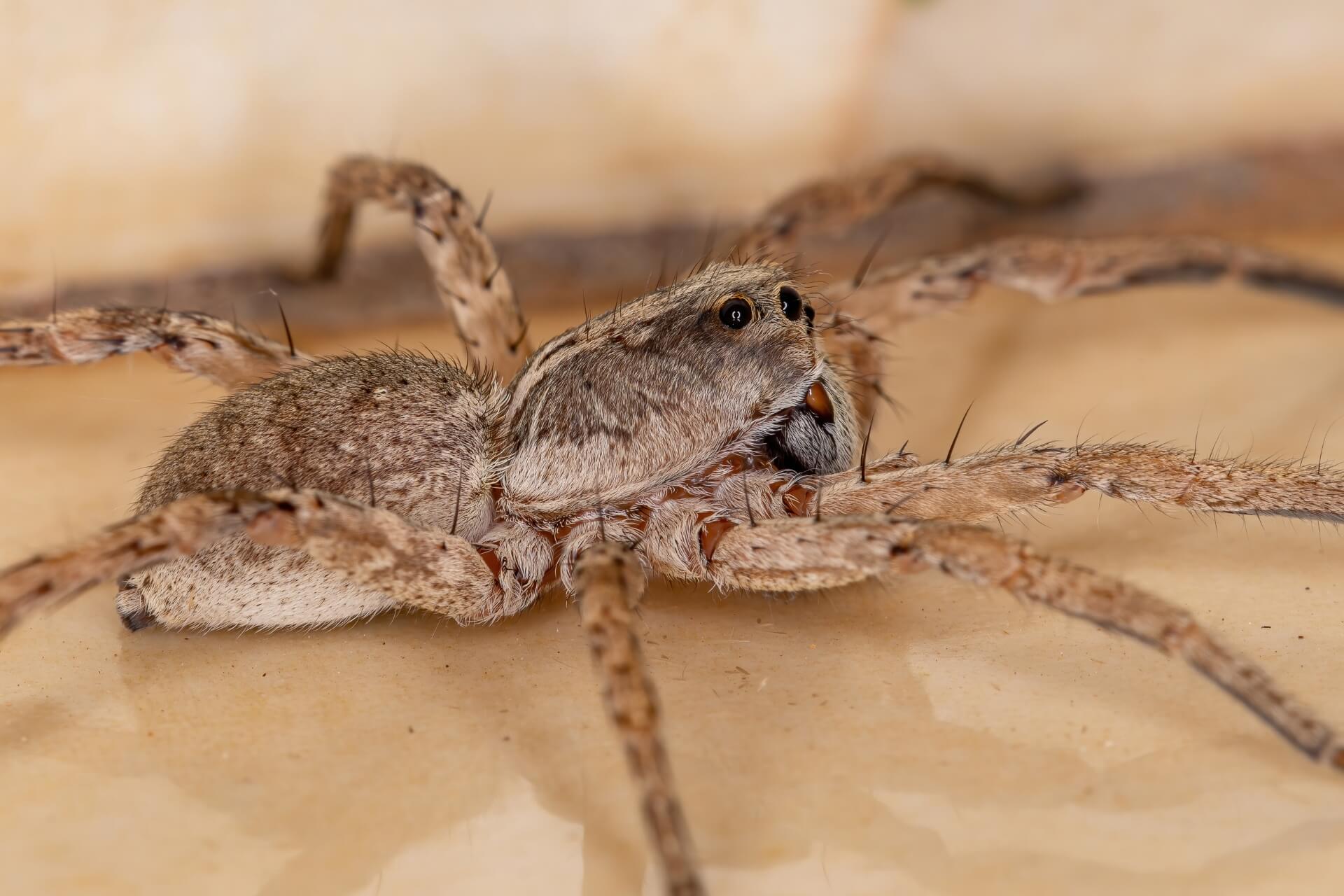
Wolf spiders have a close resemblance to a tarantula. Hence, people normally get confused between the two. They’re called as such because their mode of hunting their prey is they ambush them from where they’re burrowed or hidden. They’re quite sneaky, aren’t they?
Thankfully, this creature doesn’t cause serious danger when in close contact with humans. Although wolf spiders bite when threatened, their venom isn’t that dangerous. But once they grow in huge numbers, they can be a nuisance. And seeing spiders as big as wolf spiders can be really scary. You might as well use a spider-catcher vacuum to capture and move them outside of your house.
4Brown Recluse (Violin Spider)
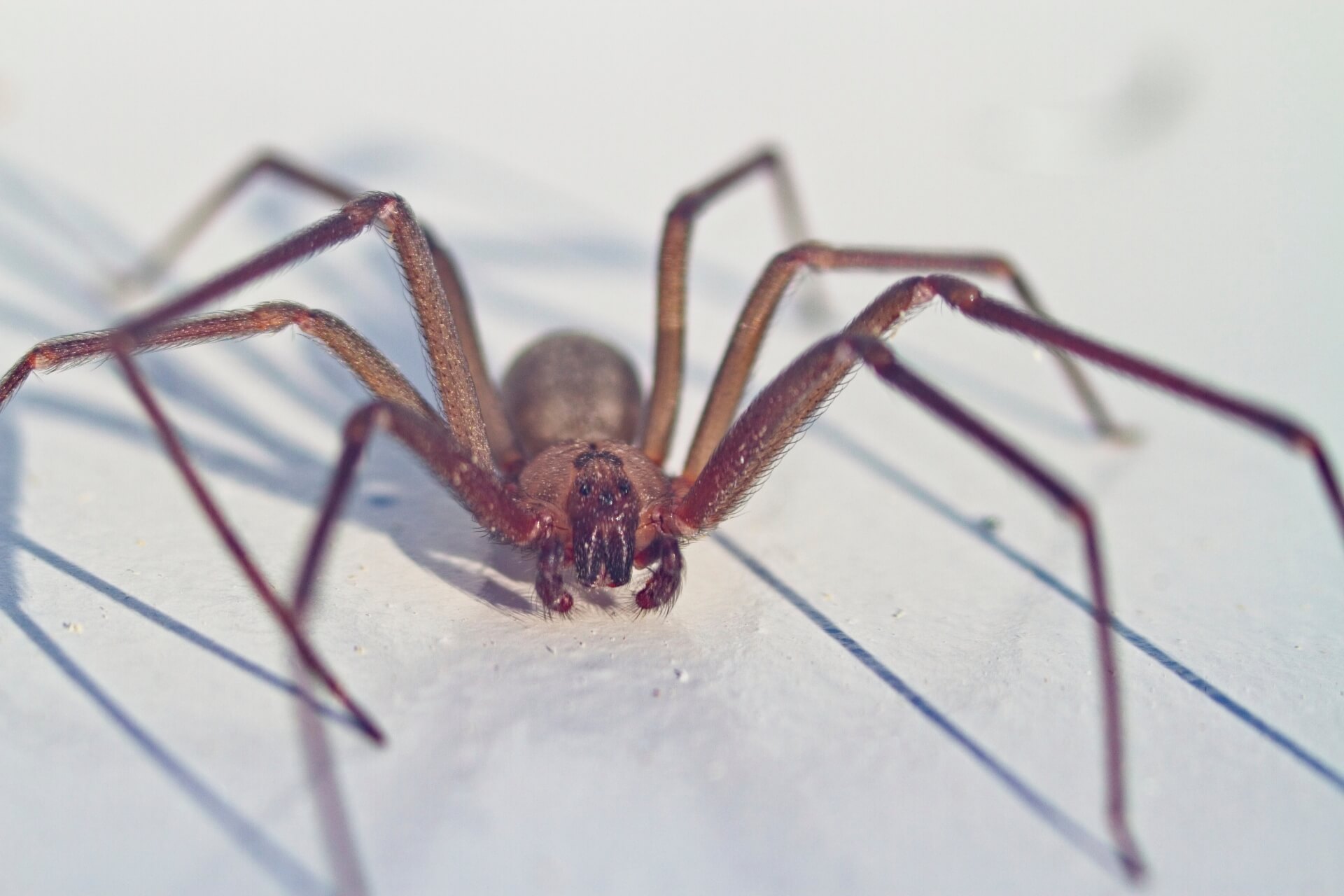
From its name, “recluse,” it’s highly possible to guess the behavior of this spider species. This one is elusive and will most likely dwell in secluded areas in your house, like the cabinets, drawers, and rarely used rooms. It’s known as the brown recluse (Loxosceles reclusa) but also goes with another name, violin spider. This is because it has a violin-shaped marking on its cephalothorax.
Brown recluse is a running spider, and it catches its prey by hunting. It’s a venomous spider, too. Once bitten, you may experience swelling and redness on the skin. Chills, nausea, and fever may also happen in worse circumstances.
For closed areas with limited airflow, like the closet, you can put spider-repellant pouches. These pouches emit a nice peppermint and lemongrass scent (which humans like) but once smelled by spiders, they get irritated. They leave the area as a result.
5Cellar Spiders

It’s quite easy to distinguish cellar spiders because they’re long-legged. Their legs could extend up to 2 inches long while their bodies remain short. You would usually find them in dark areas like the cellar, basement, and warehouse. In the US, about 20 species of cellar spiders exist.
Cellar spiders can be a problem because they continuously create webs in the area where they reside. But this is their way of trapping their prey, so there’s no way they’d stop webbing.
If you encounter problems with cellar spiders and they end up creating lots of webs, it’s time to invest in a vacuum cleaner that has an extra-long crevice tool so it reaches the dark corners. It will also make the cleaning time easier and faster.
6Northern Black Widow Spider
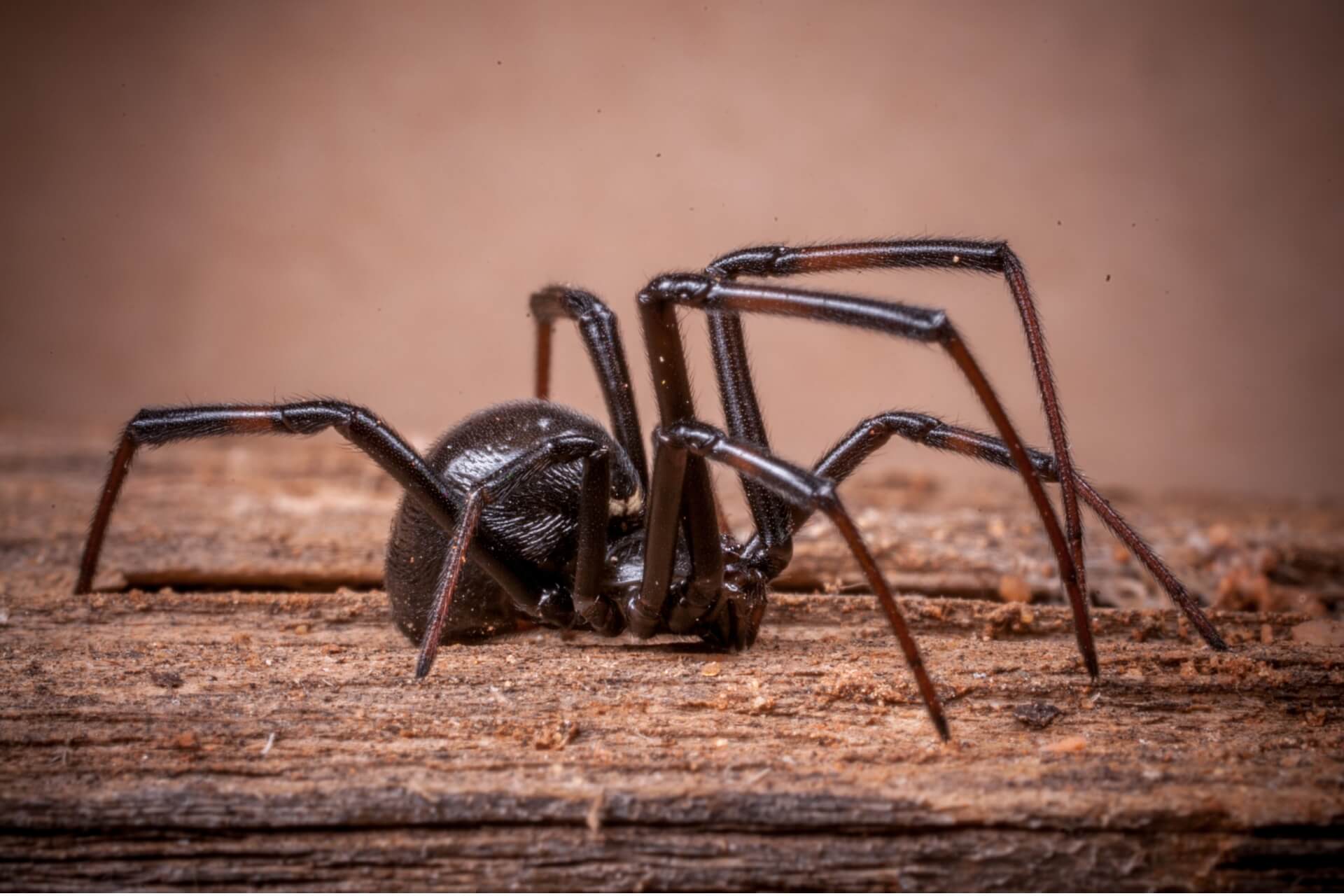
Another type of spider distributed in many US areas is the Northern black widow spider (Latrodectus variolus). Its name, “black widow,” clearly speaks of how this spider’s appearance. It has an overall black color with red-orange markings on its underside.
Black widow spider typically creates their webs in dark, undisturbed places. The traps that they create are irregularly shaped. This is where they hang invertedly until they’re able to catch prey.
Although its venom is highly toxic, a bite from a black widow is normally less dangerous because it can inject only very little amounts during the bite. However, we recommend that you immediately consult your physician if you get a bite just to be sure.
Never touch the black widow with a bare hand. Once you encounter it and you want to remove it indoors, use a spider catcher.
7Hobo Spider
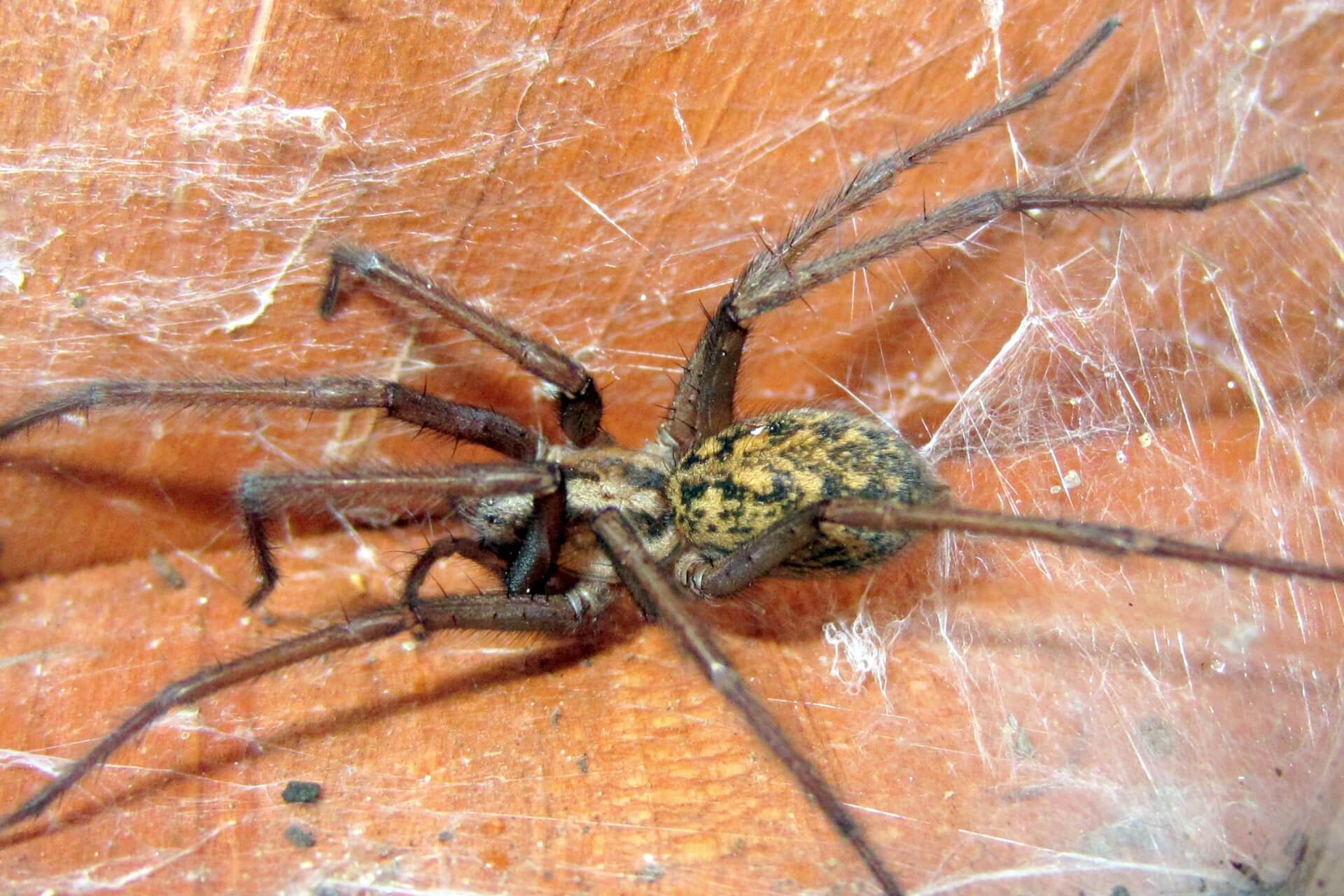
A type of funnel-web spider, the hobo spider (Eratigena agrestis) is normally found on the ground outdoors or floor indoors. They’re not the typical type of spiders that climb on high surfaces, and their webs are funnel-shaped, which they use to trap their prey.
Hobo spiders have long legs, which they efficiently use to weave their webs. Their cephalothorax is brown. It was first believed that hobo spiders contained venom that could cause necrotic wounds. However, this assumption was later proven untrue.
But if you’re concerned about the number of spiders you have around your home, get a spider trap to catch them.
8Woodlouse Hunter Spider

Another species of spider commonly found in North America is the woodlouse hunter spider. Once you see one, you’ll probably freak out because it has a dangerous appearance. Its fangs protrude directly in front while its eyes, which are six in total, are quite visible. Its head is red in color, and its abdomen is cream-gray.
Woodlouse hunter spider loves the moist environment. You can easily spot them in areas like trash cans, mulch, wood piles, and plants. If you have an outdoor garden or indoor plants, there’s a high chance that woodlouse hunter spiders are present in your home.
Installing an ultrasonic pest repeller is one way to effectively repel spiders and other pests. The ultrasonic frequencies it emits irritate the pests, causing them to scramble away from your place.
9Jewel Spider

The Jewel spider (Araneus gemmoides) is also known as the cat-faced spider. Such a name is derived from the appearance of its large abdomen, which looks like a cat face when seen from the front. It’s an orb weaver type of spider typically found in the Western part of the United States.
This species is not poisonous to humans and has a timid character. Since jewel spiders have short legs and big abdomens, they’re clumsy movers, especially outside of their web.
Since spiders create a mess out of their webs, it’s understandable why you’d want to keep them away from your home. Hence, we recommend spraying the basement and attics with spider-repellant spray with peppermint oil.
10Banded Garden Spider

The interesting thing about the banded garden spider (Argiope trifasciata) is that it has an interesting abdomen as black and yellow bands cover it. The legs are orange and are also banded in black color. This type of spider is also an orb weaver, and it’s widely distributed in all states of the US.
Like the other spiders, the banded garden spider also feeds on insects. They can also bite humans and pets. But don’t worry because the bite won’t be that harmful
