

Forget those visions of sprawling banana plantations – turns out, you can bring a touch of that tropical magic right into your living room! Indoor banana trees are a thing, and they’re surprisingly awesome. Sure, they might not give you a ton of fruit, but their giant, dramatic leaves add a serious dose of jungle vibes to any space. Plus, who doesn’t love the idea of growing something so unexpected?
About the Plant
Banana trees, despite their name, are not actually trees at all. They are herbaceous perennials, meaning their leafy stem is not woody like a true tree. What appears to be a trunk is a “pseudostem” formed by tightly packed leaf sheaths. Each pseudostem grows from a corm, a bulb-like base, and after fruiting, the pseudostem dies back, making way for new growth.
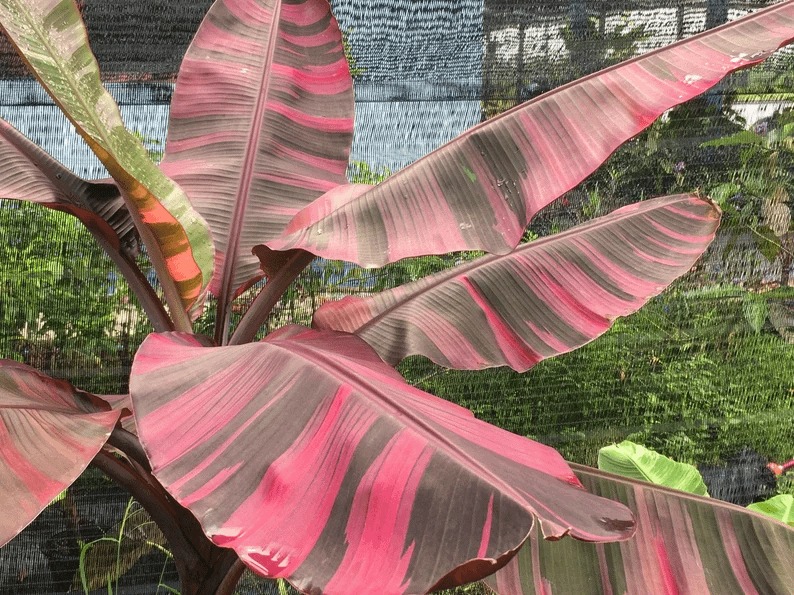
The leaves of a banana tree are equally impressive. Broad, elongated, and slightly waxy, they can grow up to 9 feet long and 2 feet wide, adding a dramatic touch to any room. As the leaves unfurl and mature, they often develop interesting rips and tears, adding to their tropical charm.
| Scientific Name | Musa spp. |
| Common Name | Banana Tree |
| Origin | Southeast Asia |
| Plant Family | Musaceae |
| Plant Type | Herbaceous perennial |
| Growth Habit | Upright, clumping |
| Hardiness Zones | USDA Zones 9-11 |
| Soil Type & pH | Well-draining, slightly acidic to neutral (5.5-7.0) |
| Sunlight | Full sun to partial shade |
| Toxicity | Non-toxic |
| Mature Size | 6-30 feet tall (varies by species) |
| Bloom Time | Summer |
How to Care for Banana Trees
To keep your indoor banana tree thriving, follow these essential care tips:
Sunlight
Banana trees thrive in bright, indirect light. Place your plant near a window that receives plenty of light, but avoid direct sunlight, which can scorch the leaves. If your home doesn’t receive enough natural light, consider using grow lights to supplement.
Temperature & Humidity
As tropical plants, banana trees prefer warm temperatures between 60°F and 85°F (15°C-29°C). They also require high humidity, so consider placing a humidifier nearby or setting the pot on a pebble tray with water to increase moisture in the air.
Water
Water your banana tree when the top inch of soil feels dry to the touch. These plants require consistent moisture but should never sit in waterlogged soil, as this can lead to root rot. Ensure your pot has proper drainage holes to allow excess water to escape.
Soil & Compost
Use a well-draining, rich potting mix for your banana tree. A combination of equal parts peat moss, perlite, and compost works well. You can also purchase a pre-mixed potting soil designed for tropical plants.
Fertilizer
Feed your banana tree with a balanced, water-soluble fertilizer once a month during the growing season (spring through fall). Dilute the fertilizer to half-strength to avoid burning the roots.
Types of Banana Trees
There are over 70 species of banana trees, but some are better suited for indoor growth than others. Here are a few popular choices:
- Dwarf Cavendish (Musa acuminata) – This compact variety is a great choice for indoor growth, typically reaching 4-7 feet tall. It can produce sweet, edible fruit.
- Super Dwarf Cavendish (Musa acuminata) – Even smaller than the Dwarf Cavendish, this variety tops out at around 3 feet tall, perfect for smaller spaces.
- Dwarf Red (Musa velutina) – Known for its striking reddish-pink flowers and fruit, this ornamental variety grows to about 4-6 feet tall.
- Dwarf Lady Finger (Musa acuminata) – Another compact option, this variety produces sweet, finger-sized fruit and grows to about 5-7 feet tall.

How to Propagate Banana Trees
Banana trees are typically propagated by division. Here’s how:
- Carefully remove the plant from its pot and gently separate the offsets (pups) that have grown from the main stem, ensuring each offset has its own roots.
- Plant the offsets in individual pots filled with fresh, well-draining potting mix.
- Water the newly potted offsets thoroughly and place them in a warm, bright location.
- Keep the soil consistently moist but not soggy, and your new banana trees should begin to grow within a few weeks.
Repotting Banana Trees
As your banana tree grows, it will eventually outgrow its pot. Repot your plant every 1-2 years, or when you notice roots growing out of the drainage holes. Choose a pot that is 2-3 inches larger in diameter than the current one, and ensure it has proper drainage. Gently remove the plant from its old pot, loosen the roots, and place it in the new pot with fresh potting mix. Water thoroughly after repotting.
Pruning Tips
Pruning your banana tree is essential for maintaining its size and shape. Remove any yellow, brown, or damaged leaves as they appear, cutting them close to the stem. If your plant becomes too tall, you can cut the main stem back to the desired height. New growth will emerge from the base of the plant.
Common Problems with Banana Trees
Pests and Diseases
Banana trees can be susceptible to spider mites, aphids, and mealybugs. Keep an eye out for these pests and treat them promptly with insecticidal soap or neem oil. Diseases like root rot can be prevented by avoiding overwatering and ensuring good drainage.
Yellowing leaves
This can be caused by overwatering, underwatering, or nutrient deficiencies. Adjust your watering schedule and fertilize regularly to resolve the issue.
Brown leaf tips
Often a sign of low humidity or inconsistent watering. Increase humidity around the plant and maintain a consistent watering schedule.
Slow growth
Insufficient light, improper watering, or lack of nutrients can slow down growth. Ensure your banana tree receives bright, indirect light and follow a regular watering and fertilizing schedule.
FAQ
In their natural habitat, banana trees can live for about six years, but indoors, they may live for several years with proper care.
Bananas typically grow during the warmer months of spring through fall. Growth slows or stops during the cooler winter months.
Dwarf banana tree varieties can grow anywhere from 2-10 feet tall, depending on the specific cultivar. Super dwarf varieties stay the smallest, while others like the Dwarf Cavendish can reach up to 7 feet or more.
