
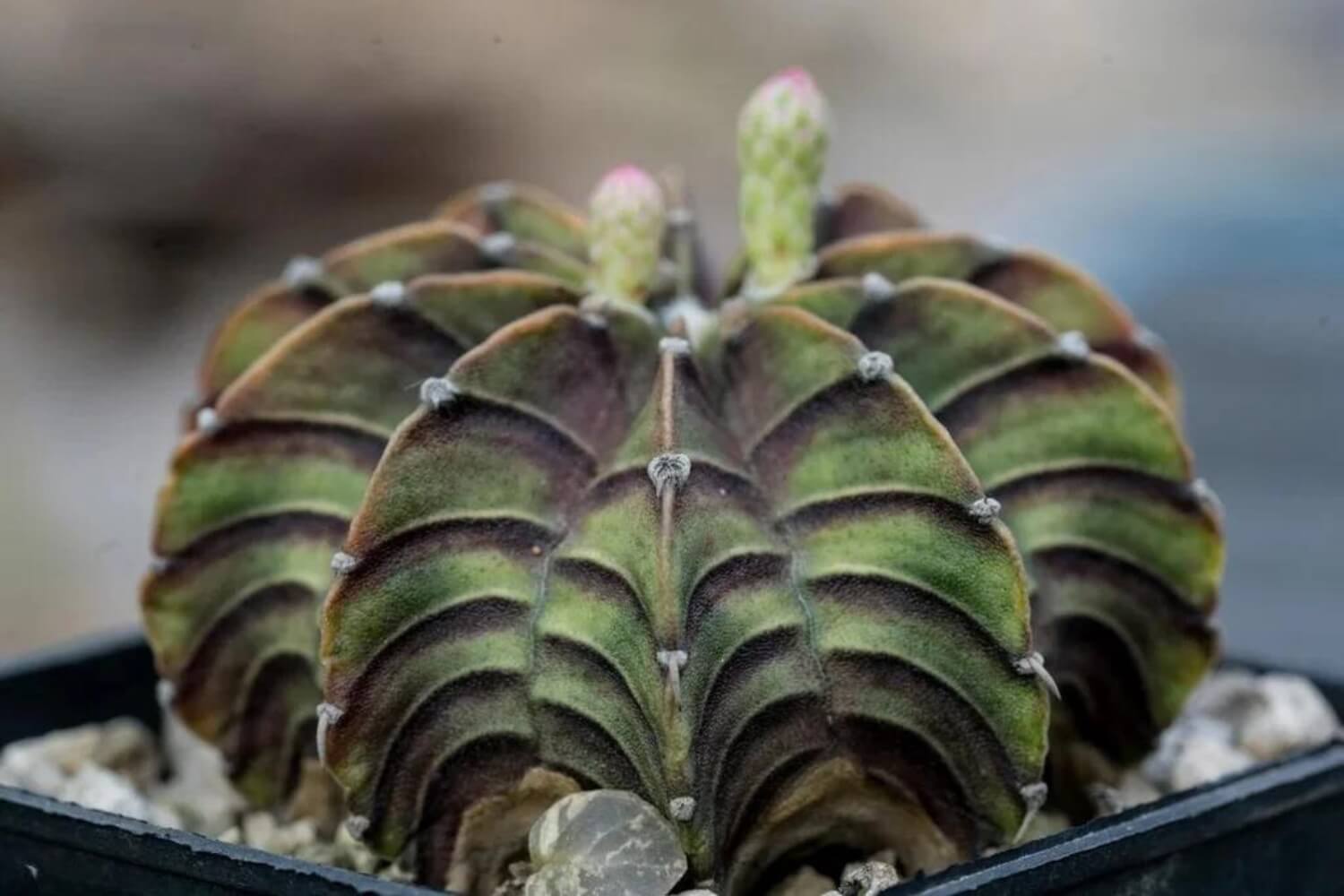
Searching for a plant that’s both captivating and effortless to care for? Say hello to the Gymnocalycium stenopleurum, a small but mighty cactus that packs a punch in the world of indoor gardening. This charming little plant, native to Paraguay, offers a host of benefits that make it an excellent choice for both new and experienced plant parents. Let’s dive into the eight advantages of adding this pint-sized powerhouse to your plant collection.
Striking Aesthetic Appeal
The Gymnocalycium stenopleurum is a true showstopper. Its compact, globular shape and distinctive ribbed body make it a visual treat. The plant’s coloration is particularly noteworthy, featuring a mesmerizing blend of grey-green and brownish-red bands that create a unique, almost marbled appearance. This eye-catching pattern adds a touch of natural artistry to any space, making it an ideal accent piece for your home or office.
But the visual appeal doesn’t stop there. When in bloom, this cactus produces stunning white flowers that contrast beautifully against its textured body. These blossoms, which can reach up to 5-7 cm in length, open fully to reveal their delicate petals, creating a captivating display that’s sure to draw admiration from visitors and plant lovers alike.
Space-Efficient Design
In today’s world of compact living spaces, finding plants that don’t overwhelm your area is crucial. The Gymnocalycium stenopleurum fits the bill perfectly. This cactus typically grows to a modest size of about 12 cm in height and 6-12 cm in diameter. Its compact nature makes it an ideal choice for small apartments, dorm rooms, or office desks where space is at a premium.
You can easily place this little gem on a windowsill, or bookshelf, or even as a centerpiece on your coffee table without worrying about it taking over the space. Its small stature also makes it perfect for creating miniature desert landscapes or adding to succulent arrangements, allowing you to flex your creative muscles in container gardening.
Low Maintenance
One of the most appealing aspects of the Gymnocalycium stenopleurum is its low-maintenance nature. This hardy cactus is perfect for those who want to enjoy the benefits of plant ownership without the demanding care routines some species require. Its drought-tolerant characteristics mean you won’t need to worry about frequent watering schedules.
The cactus thrives in well-draining soil and doesn’t require constant attention. It’s an ideal choice for busy individuals, frequent travelers, or those who simply prefer a more hands-off approach to plant care. With minimal effort, you can enjoy a thriving, healthy plant that adds life to your space without adding stress to your daily routine.
Air-Purifying Properties
While all plants contribute to improving air quality to some degree, the Gymnocalycium stenopleurum punches above its weight in this department. Like many cacti, it’s particularly adept at removing toxins from the air, including common household pollutants like benzene and formaldehyde.
By absorbing these harmful substances and releasing oxygen, this little cactus acts as a natural air purifier. Placing a few of these plants around your home or office can contribute to a healthier indoor environment, potentially reducing the risk of respiratory issues and improving overall air quality.
Stress-Reducing Companion
In our fast-paced world, finding ways to reduce stress is crucial for maintaining mental health and well-being. The Gymnocalycium stenopleurum can play a surprising role in this aspect of your life. Studies have shown that interacting with plants, even through simple activities like watering or observing their growth, can have a calming effect on the mind.
The act of caring for this low-maintenance cactus can provide a sense of accomplishment and connection to nature, helping to reduce stress and anxiety. Its slow, steady growth serves as a reminder to slow down and appreciate the small changes in life, fostering a sense of mindfulness and patience.
Versatile Growing Conditions
The Gymnocalycium stenopleurum is remarkably adaptable, thriving in a variety of environments. This versatility makes it an excellent choice for both indoor and outdoor cultivation, depending on your climate. In regions with mild winters, you can grow this cactus outdoors in a rock garden or a well-draining container.
For those in colder climates, this cactus adapts well to indoor conditions. It prefers bright, indirect light but can tolerate some direct sunlight, making it suitable for various locations within your home. This adaptability means you can enjoy the beauty of this cactus regardless of your living situation or local climate.
Educational Opportunity
For those interested in botany or looking for a way to introduce children to the world of plants, the Gymnocalycium stenopleurum offers an excellent educational opportunity. Its unique appearance and growth habits provide a fascinating subject for learning about plant adaptation, desert ecosystems, and the diversity of the cactus family.
Observing the cactus’s slow growth and occasional flowering can teach valuable lessons about patience and the life cycles of plants. Its care requirements also offer practical lessons in plant biology, covering topics like water conservation, soil composition, and the importance of proper drainage in plant health.
Long-Lasting Beauty
Unlike some plants that require frequent replacement, the Gymnocalycium stenopleurum is a long-term companion. With proper care, this cactus can thrive for many years, becoming a lasting fixture in your home or garden. Its slow growth rate means it won’t outgrow its space quickly, allowing you to enjoy its beauty for an extended period without the need for frequent repotting or pruning.
This longevity not only provides continuous enjoyment but also makes the Gymnocalycium stenopleurum a cost-effective choice for plant enthusiasts. Instead of constantly buying new plants, you can invest your time and energy into nurturing this enduring cactus, watching it slowly mature and potentially even produce offsets that can be propagated into new plants.
