

Among the colors we have in the color wheel is green, which is a secondary color born from a combination of blue and yellow. This color is often associated with life, health, prosperity, and fertility. Pink, on the other hand, is a tint of red. When red is combined with white, the result is a desaturated shade. It’s a very positive color that represents love, passion, femininity, affection, and harmony.
Since green and pink are complementary in the color wheel, they often generate a neutral color, such as gray or brown. However, the shades may vary depending on the amount of green or pink color you use for mixing as well as the shade.
Combining Various Shades of Green and Pink
Certain shades of gray can be achieved by mixing the right proportion of green and pink.
For example, mixing mint green and light pink results in taupe color, which is an intermediate shade of gray and brown. This is an interesting color you’ll encounter in home decor, architecture, and fashion. Because of its neutral nature, you can combine taupe with almost any color.
If your goal is to have a light gray shade, you can use a dark shade of green combined with a blush pink shade. See, it doesn’t have to be white and black all the time to produce a gray shade. The blush pink color desaturates the dark green shade, producing a new tone.
If you try to increase the dark green, the color shifts to grayish green.
Now, let’s see how to come up with brown shades.
If you want the common brown color, all you need is to mix equal amounts of the natural green and pink shades. The resulting shade is a muted brown color, which is best combined with neutrals.
Copper tan is the resulting color if you choose to combine Fuschia pink and lime green. These two shades are quite vibrant, and the result is a warm neutral shade. It will perfectly fit when combined with other muted colors such as beige, brown, gray, and white. But it will also create a good combination when combined with bolder colors such as navy peony and a shade of blue.
Another interesting color that may arise from the green and pink combination is an old rose, which is another shade of pink. This results from mixing light green shade and dark pink shade. Old rose is a grayish-pink color that speaks of vintage and class. You can combine old rose shades with many muted colors, but it will also look good with its complementary color, teal.
How to Get the Right Shade
If you’re using paint, you’ll have to do a trial and error. But always start with small amounts when swatching colors. Go ahead and experiment until you get the right proportions of green and pink to come up with your desired shade.
Another easy way to combine is by using a color mixing tool. This works best for digital work, and you want to get the exact color hex code for a particular shade.
Combining Pink and Green in Your Rooms
There are many ways to combine pink and green to make a complementary mix that looks good. Here’s how you can do it.
Use the Same Level of Shade or Saturation

Depending on your artistic purpose, it’s always a good step to combine colors having the same level of saturation. If your goal is to create a soft tone of colors, better use a pastel color shade of green and pink. These two go well compared to combining a vibrant green and pastel pink or vice versa. Look at how @househomo used pastel pink and green to achieve this pretty kitchen look.
Decide Which One is Dominant
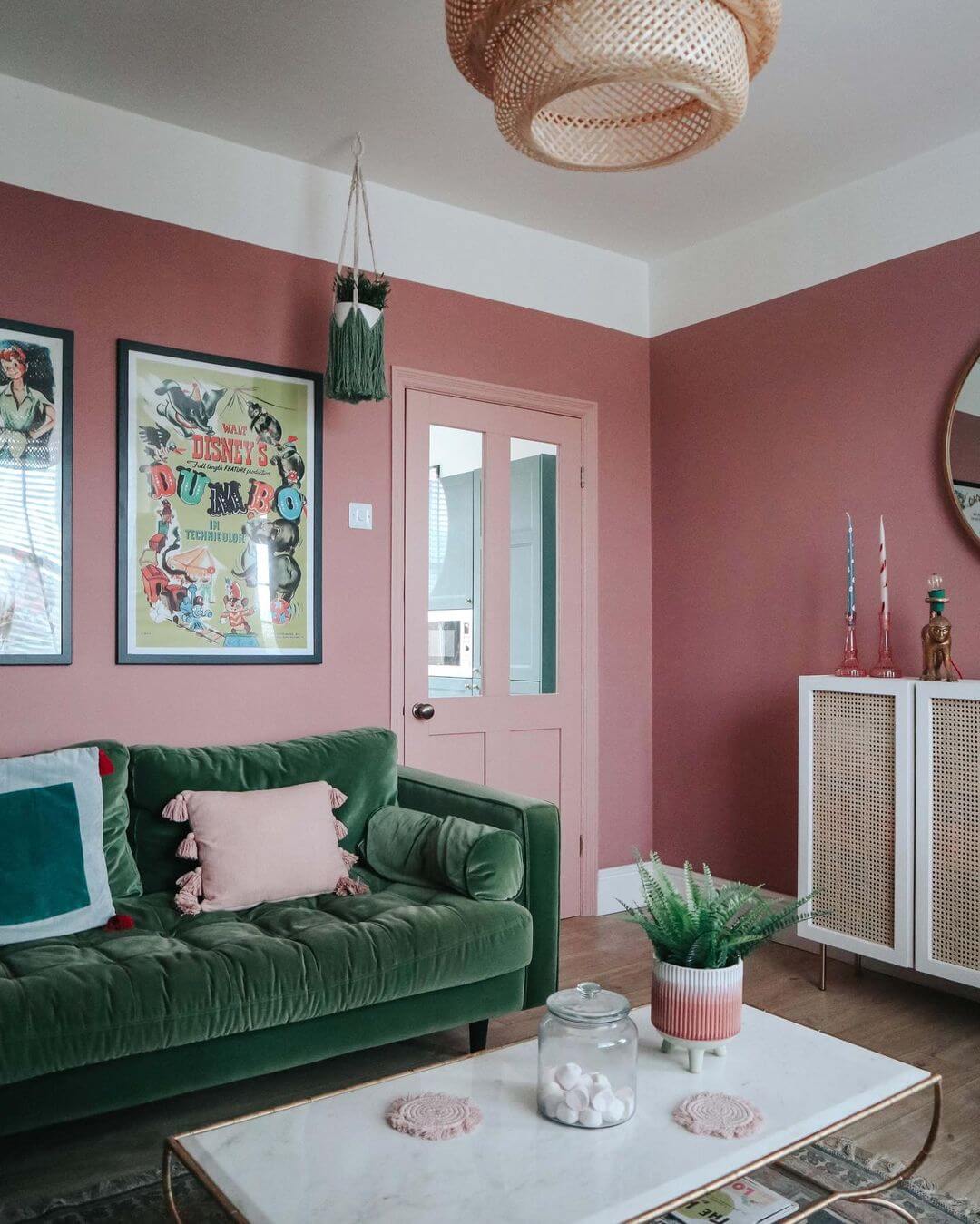
In design, there’s what we call a 60-30-10 rule which is a principle that helps harmonize color. The dominant color should be 60% of the entire palette. You can choose which one should be dominant: pink or green. In this living room by @megmonde, she chose pink as the dominant color by using it as the wall paint. The green color became the secondary color.
You can apply the same technique. Furniture like this olive green velvet sofa will definitely match your pink-painted wall. Don’t forget to add matching pink nordic throw pillowcases. And of course, use a green macrame plant hanger to hang your plant.
Make the Other Color an Accent Color
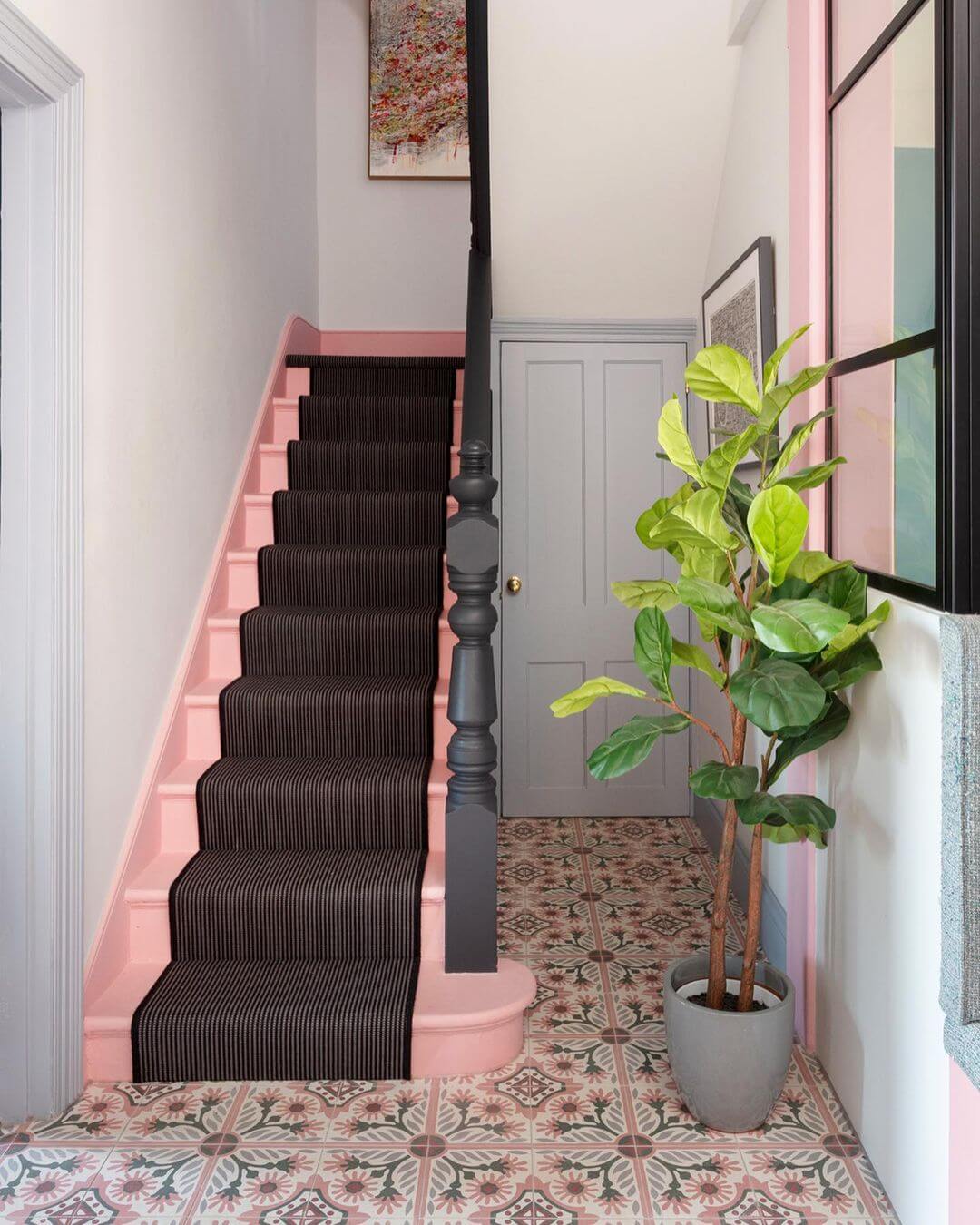
Accent color comprises only 10% of the entire palette but it’s the most noticeable of all. Its purpose is to add impact or interest. An item as simple as an indoor plant can serve as an accent, changing the overall feel of your interior. A fiddle leaf fig tree serves as the accent color in the renovated hallway of @pinkhouseliving. In another setup by @talkadecor, a brighter shade of pink in the form of tulip flowers serves as the accent color.
Use White as the Backdrop
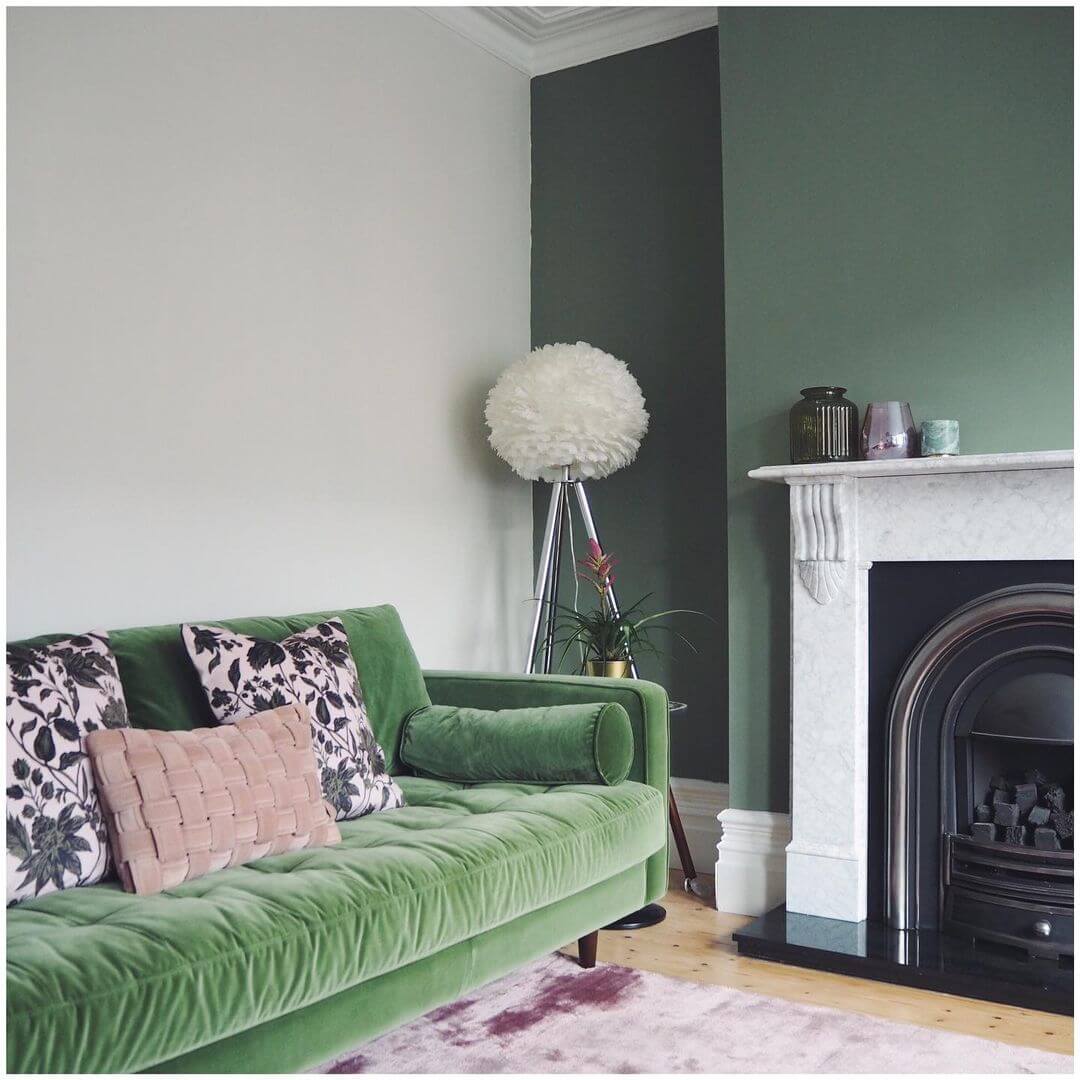
White is a neutral color and using it as a backdrop for your pink and green combo will make these colors appear larger. The color white gives an illusion of an added space and it also highlights the other colors in the palette.
For example, the white paint backdrop used by @prettylittleterrace allows the green sofa to appear more noticeable. It also adds balance to the emerald green wall on the side. The white backdrop also matches the pink throw pillows, making the combination entirely pleasing to the eyes. You can also opt for a patterned backdrop by using textured wallpaper.
Combine the Dark and Lighter Shades Together
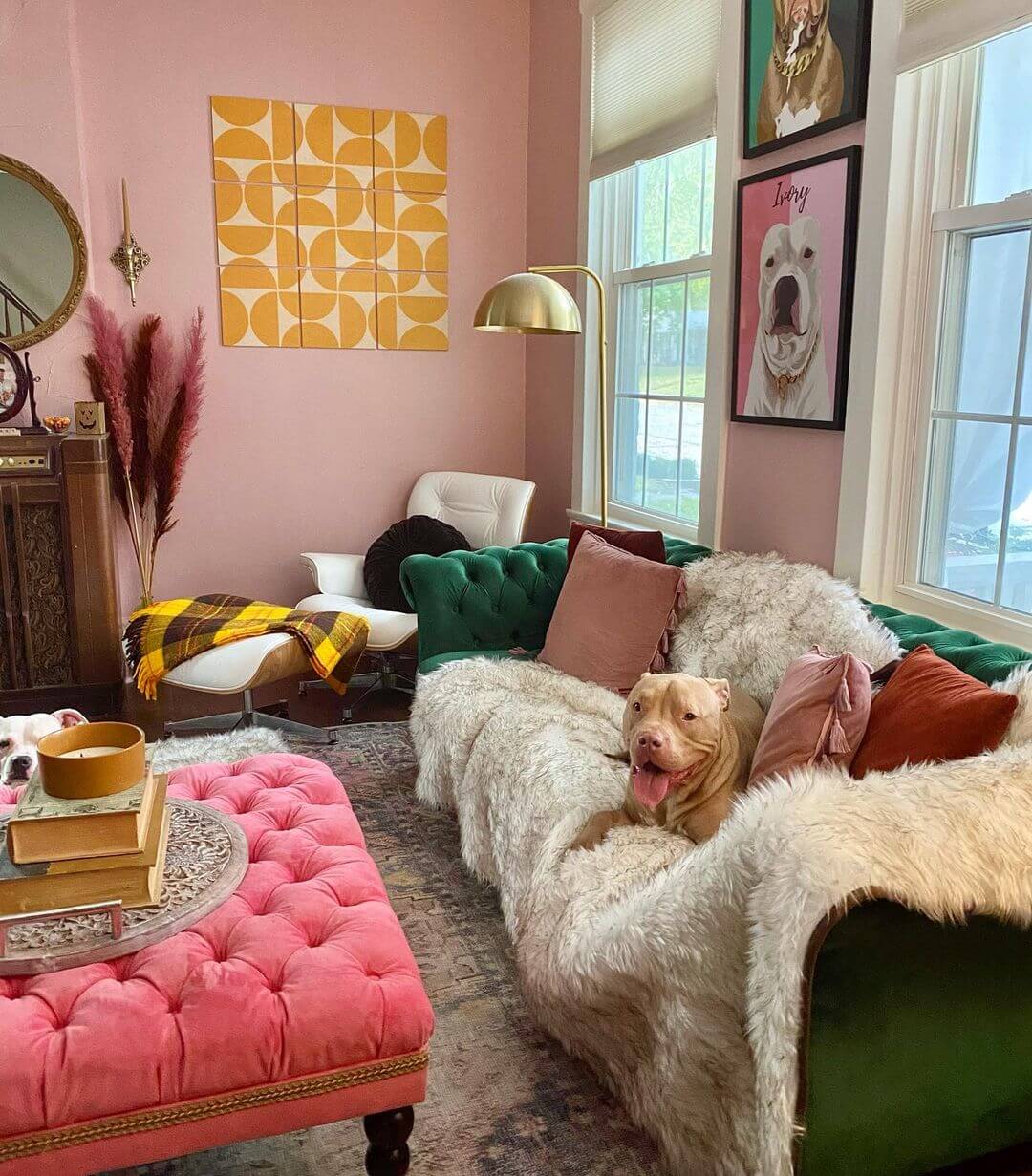
Sometimes, all you need to make variations is to combine the dark and light counterparts of your green and pink colors. This technique called layering is enough to make a delightful palette. The living room setup by @ourcollectivehome is a perfect example. They used several shades of pink in the whole palette. Aside from a bright Fuschia pink cushioned table, they also used other shades of pink in the form of the pampas grass display and throw pillows.
