
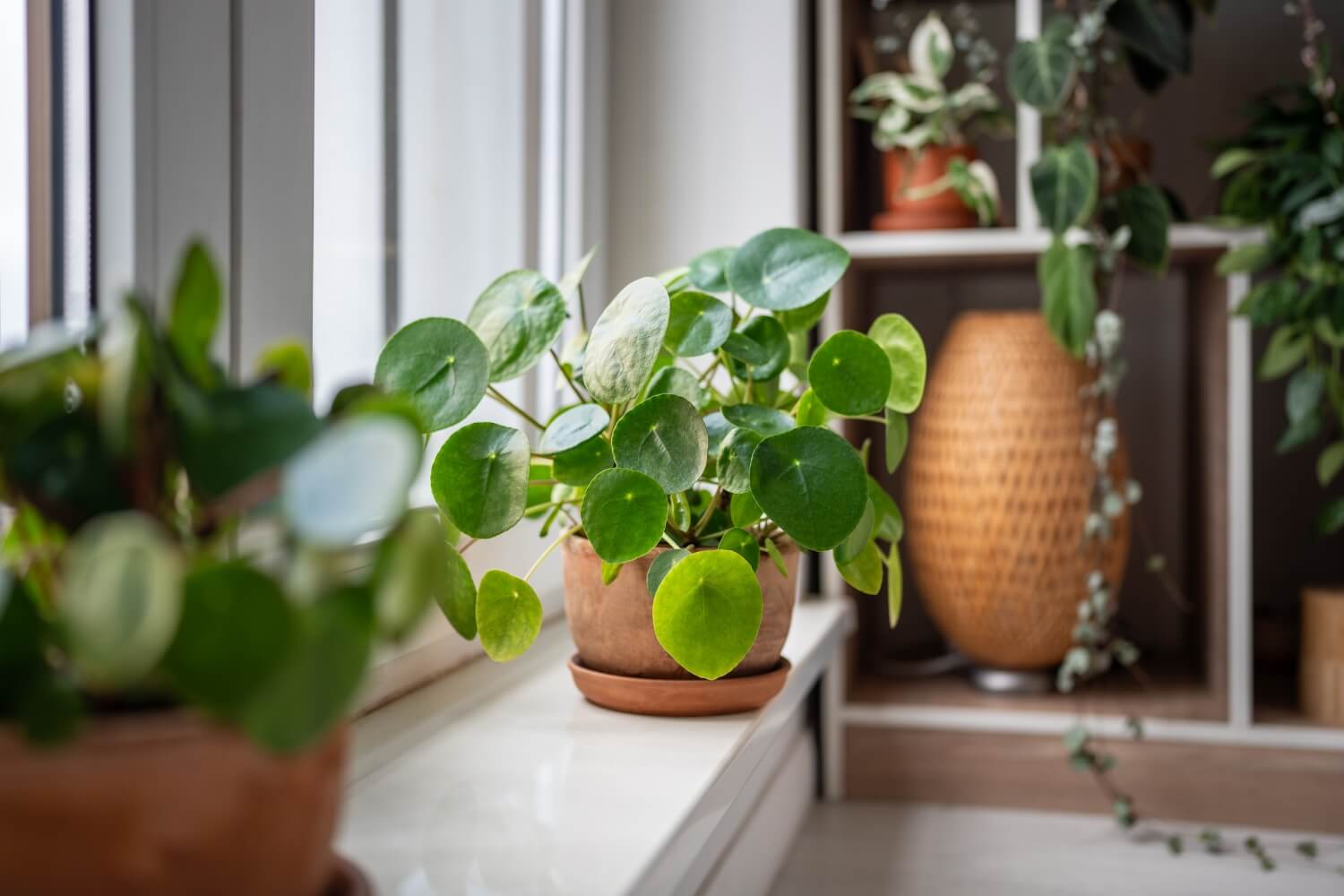
The Chinese Money Plant (Pilea peperomioides) is a charming houseplant native to the Yunnan Province in southern China. This member of the Urticaceae family is instantly recognizable by its distinctive round, coin-shaped leaves and long, slender stems. The vibrant green leaves boast a glossy surface that adds a touch of understated elegance to any space.
One of the most appealing features of the Chinese Money Plant is its unique growth habit. As the plant matures, leaves sprout from a central stem in a spiraling pattern, creating a visually pleasing and eye-catching display. The stems can reach up to 12 inches in height, while the leaves typically measure between 2 to 4 inches in diameter.
In Chinese culture, the Chinese Money Plant has long been associated with good fortune and prosperity, earning it nicknames like the “Coin Plant” or “Sharing Plant.” It’s believed that this plant can attract financial luck and abundance, making it a popular housewarming or business gift. Additionally, like many houseplants, the Chinese Money Plant offers air-purifying qualities, helping to improve the quality of your indoor environment.
| Scientific Name | Pilea peperomioides |
| Common Name | Chinese Money Plant, UFO Plant, Pancake Plant |
| Origin | Southern China (Yunnan and Sichuan provinces) |
| Plant Family | Urticaceae |
| Plant Type | Perennial, Herbaceous |
| Growth Habit | Upright, Clumping |
| Hardiness Zones | USDA Zones 10-12 |
| Soil Type & pH | Well-draining, slightly acidic to neutral (pH 6.0-7.5) |
| Sunlight | Bright, indirect light |
| Toxicity | Non-toxic to humans and pets |
| Mature Size | 8-12 inches tall, 12-18 inches wide |
| Bloom Time | Spring to Summer (small, white flowers) |
Types of Chinese Money Plant
While the classic Pilea Peperomioides remains the most widely recognized, several other cultivars offer subtle variations in their appearance:
- Pilea Peperomioides ‘Sugar’ – This variety features smaller, rounder leaves than the classic Pilea. It exhibits a lighter green hue and a delicate white variegation outlining the leaf margins.
- Pilea Peperomioides ‘Mojito’ – The ‘Mojito’ cultivar boasts leaves with distinctive, irregular white markings. This creates a unique marbled pattern across the foliage.
- Pilea Peperomioides ‘Raindrop’ – True to its name, this variety showcases leaves with a slightly elongated, teardrop shape, featuring a subtle pointed tip.

How to Care for Pilea Peperomioides
Sunlight
Pilea peperomioides thrives in bright, indirect sunlight. An east or north-facing window provides an ideal location, offering ample light without the risk of harsh, direct rays. If you notice leaf discoloration (paleness or brown spots), adjust the plant’s light exposure as this may indicate excessive direct sun.
Temperature & Humidity
Chinese Money Plants prefer a moderate temperature range between 60°F and 75°F (15°C to 24°C). While they tolerate slightly cooler temperatures, protect them from drafts and temperature extremes. Moderate humidity levels around 40-50% are optimal. If your indoor environment is dry, consider using a humidifier or placing a pebble tray filled with water near the plant to increase humidity.
Watering Needs
Water your plant when the top inch of soil feels dry. Saturate the soil thoroughly, allowing excess water to drain through the pot’s drainage holes. Discard any drained water to prevent root rot. Reduce watering frequency during the winter months when the plant experiences slower growth.
Soil & Compost
A well-draining potting mix is essential for Pilea peperomioides. A suitable combination consists of equal parts peat moss, perlite, and standard potting soil. Ensure your pot has drainage holes to prevent waterlogging. Adding a layer of activated charcoal at the pot’s base can further improve drainage and prevent soil compaction.
Fertilizer
During the active growing season (spring through fall), fertilize your Chinese Money Plant every 4-6 weeks with a balanced, water-soluble fertilizer diluted to half-strength. Withhold fertilization during the winter when growth naturally slows.
How to Propagate Pilea Peperomioides
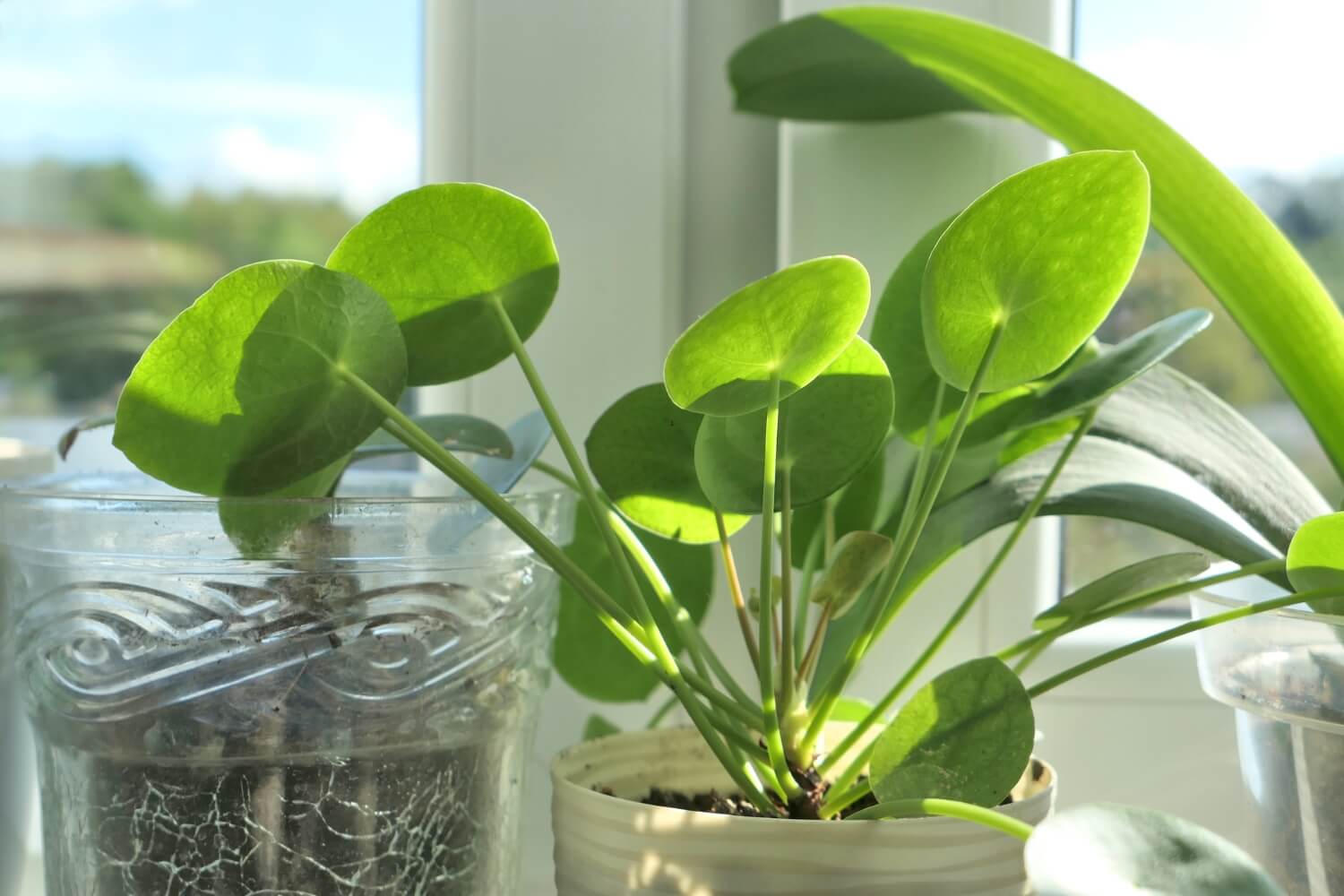
Pilea peperomioides is easy to propagate through the division of offsets, also known as “pups.” These small plantlets grow from the base of the mother plant and can be gently separated and potted individually. Here’s how to propagate your Chinese Money Plant:
- Locate a healthy offset with its own set of leaves and roots.
- Carefully remove the offset from the mother plant using a clean, sharp knife or scissors.
- Plant the offset in a small pot filled with well-draining potting mix.
- Water the newly potted offset and place it in a spot with bright, indirect light.
- Keep the soil moist but not soggy, and the offset should establish itself within a few weeks.
Potting & Repotting
For optimal growth, repot your Pilea peperomioides every 1-2 years or when you notice the plant outgrowing its current container. Select a new pot that is one size larger than the current pot and ensure it has adequate drainage holes.
Carefully remove the plant from its existing pot, gently loosening any bound roots. Place it in the new pot, filling it with fresh, well-draining potting mix. Thoroughly water your plant after repotting and situate it in an area with bright, indirect light.
How to Prune Chinese Money Plant
Pruning your Chinese Money Plant is an important part of maintaining its health and desired shape. Use clean, sharp scissors or pruning shears to remove any dead, damaged, or yellowing leaves. To promote a bushier, more compact growth habit, you can also trim back any excessively long or leggy stems. For optimal results, prune your plant during its active growing season in the spring or summer.
Overwintering
The Chinese Money Plant experiences a natural period of reduced growth during the winter. Adjust your care routine by decreasing the watering frequency and withholding fertilizer. Ensure the plant receives bright, indirect light, and protect it from cold drafts. If temperatures consistently fall below 50°F (10°C), relocate the plant to a warmer position.
Blooming Period
Pilea peperomioides occasionally produces small, white or green flowers on elongated stems. Although typically appearing during spring or summer, these flowers are relatively inconspicuous. Since they don’t significantly enhance the plant’s aesthetic appeal, you may choose to remove them. The flowers are self-pollinating and may develop into small, round seed pods.
Common Problems with Chinese Money Plant
Pests and Diseases
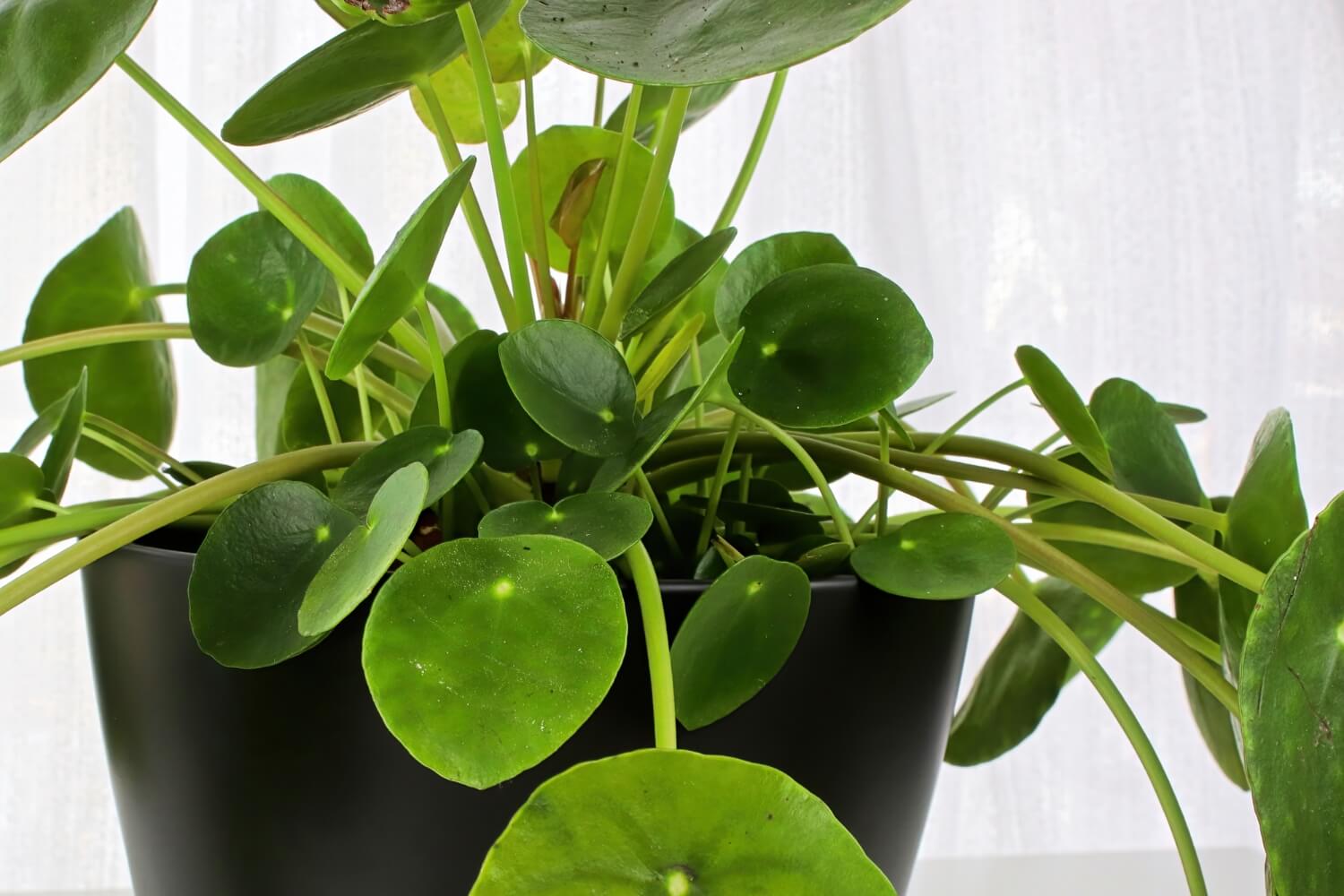
While generally resilient, Chinese Money Plants can sometimes encounter issues with pests and diseases. Watch for mealybugs and spider mites, as they may occasionally infest the plant and damage the foliage.
If you notice any pests, isolate the affected plant and treat it with a natural insecticide, such as neem oil or insecticidal soap. Regularly inspecting your plant and maintaining proper care can help prevent pest infestations.
Root Rot
Overwatering or insufficient soil drainage can result in root rot. Indications of root rot include yellowing leaves, wilting, and an unpleasant odor from the soil. If root rot is suspected, carefully remove the plant from its pot, prune away any damaged roots, and repot in fresh, well-draining soil.
Yellowing Leaves
If the leaves of your Pilea peperomioides start to turn yellow, it could be a sign of overwatering, underwatering, or insufficient light. Check the soil moisture and adjust your watering schedule accordingly. Ensure the plant is receiving enough bright, indirect light.
Drooping Leaves
Drooping leaves often signal that your Pilea is in need of water. If the top inch of soil feels dry, water the plant thoroughly. However, if the soil is moist yet the leaves remain droopy, check for signs of overwatering or drainage problems.
Brown Leaf Tips
Brown leaf tips may arise from several causes, including low humidity, excessive fertilizer use, or exposure to cold drafts. Consider increasing humidity around your Pilea, reducing fertilizer applications, and protecting it from cold air sources like air conditioning vents or windows.
Leggy or Sparse Growth
If your Chinese Money Plant develops a leggy appearance with long, sparse stems, this suggests insufficient light. Relocate the plant to a brighter location with indirect light. Pruning back leggy stems can also encourage fuller, more compact growth.
FAQ
Yes, Pilea peperomioides makes an excellent indoor plant due to its attractive appearance, relatively low maintenance requirements, and ability to thrive in typical indoor conditions.
To care for your Pilea indoors, provide it with bright, indirect light, water it when the top inch of soil feels dry, and maintain moderate humidity levels. Avoid exposing the plant to direct sunlight, cold drafts, or extreme temperatures.
In Chinese culture, the Pilea peperomioides is often associated with good luck and prosperity, which is why it is sometimes referred to as the “Chinese Money Plant” or “Coin Plant.”
Yes, Pilea peperomioides is non-toxic to humans and pets, making it a safe choice for households with children or curious animals.
