

The snake plant also known as Dracaena trifasciata, with its striking sword-like leaves and distinctive patterns, brings bold architectural lines to any room. Its upright green leaves, often featuring bands and yellow borders, create an instant focal point while requiring minimal care. Native to West Africa, this adaptable plant fits perfectly into busy lifestyles with its low-maintenance nature and air-purifying abilities.
| Scientific Name | Dracaena trifasciata |
| Common Name | Snake Plant |
| Plant Family | Asparagaceae |
| Plant Type | Evergreen perennial |
| Growth Habit | Upright, rosette |
| Hardiness Zones | 9-11 USDA |
| Soil Type & pH | Sandy, well-drained |
| Sunlight | Sun to part shade |
| Toxicity | NMildly toxic to pets and humans |
| Mature Size | 2-5 ft. tall as houseplant |
| Bloom Time | Spring (rare indoors) |
Snake Plant Varieties
If you’re considering adding a snake plant to your space, you’ve got options.
- Dracaena trifasciata ‘Laurentii’ – The classic choice for many plant parents, featuring tall leaves with striking yellow margins. These eye-catching borders add a bright touch to any room, making it perfect for spaces that need a pop of color.
- Dracaena trifasciata ‘Hahnii’ – Also known as the Bird’s Nest Snake Plant, this compact variety stays small and neat. Its shorter leaves form a tight rosette pattern, making it ideal for desks, shelves, or small spaces where you want to add some green without taking up too much room.
- Dracaena trifasciata ‘Moonshine’ – A modern favorite with its silvery-green leaves that seem to glow in low light. The pale, uniform coloring creates a sophisticated look that works beautifully in contemporary spaces or minimalist settings.
- Dracaena trifasciata ‘Cylindrica’ – Standing out from its flat-leaved cousins, this unique variety sports round, spear-like leaves that grow straight up. These cylindrical leaves create an architectural statement that adds visual interest to any room.
Caring for Snake Plant
These resilient plants adapt well to various conditions, but providing the right care helps them thrive. Let’s break down the essential care requirements to keep your snake plant healthy and vibrant.
Light Conditions
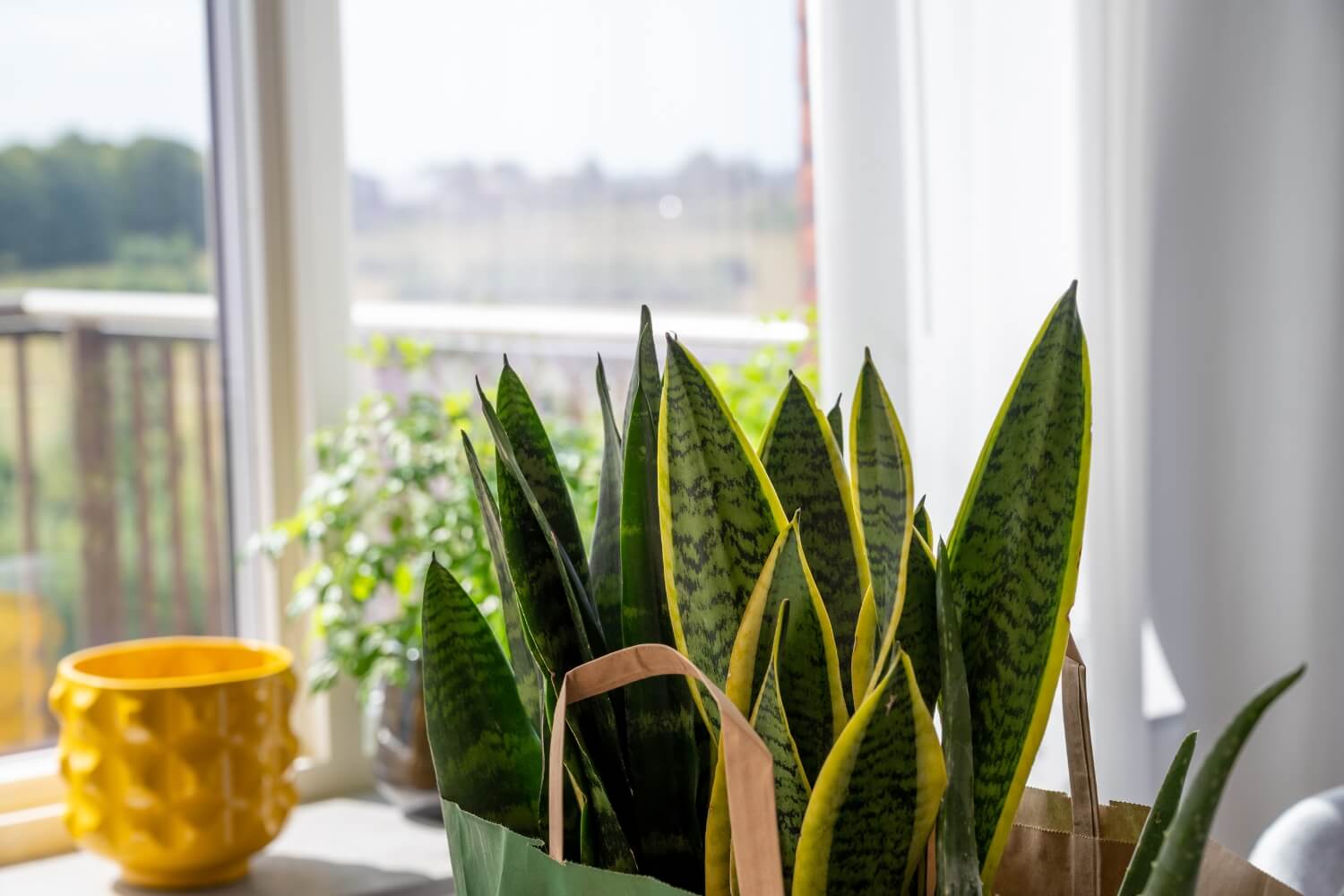
Your snake plant isn’t picky about lighting, but it’ll really shine in bright, indirect light. While it handles low-light spots like a champ, too much direct sun can damage those striking leaves. Position it about a foot away from south-facing windows to protect those gorgeous leaf patterns from scorching.
Temperature & Humidity
These tough plants love warm spaces between 70°F and 90°F—perfect for most homes. Keep them away from drafty windows and air conditioning vents since temperatures below 50°F can spell trouble. As for humidity, they’re perfectly content with standard indoor levels, so no need for extra misting or humidifiers.
Watering Needs
When it comes to watering, less is definitely more. Let the soil dry out completely between drinks—these plants would rather be a bit thirsty than swimming in excess water. During active growth in spring and summer, water every 2-3 weeks. Cut back to monthly watering in winter when growth slows down.
Soil & Compost
Set your snake plant up for success with well-draining, sandy soil. A regular cactus or succulent mix works great, or mix your own by combining standard potting soil with sand or perlite. Aim for soil pH between 6.0 and 7.5 to keep those roots happy.
Fertilizer
While snake plants aren’t big eaters, a little boost during the growing season goes a long way. Feed monthly from spring through summer with a balanced houseplant fertilizer at half strength. Skip fertilizing in fall and winter when your plant takes a natural growth break.
How to Propagate Snake Plant
Got a thriving snake plant? Sharing is caring! The easiest way to multiply your collection is through leaf cuttings. Start by selecting a healthy leaf and cutting it into 3-4 inch sections. Let the cuts heal for a couple of days, then plant them about an inch deep in well-draining soil. Keep the soil just slightly moist, place in bright indirect light, and watch for new growth in a few weeks.
Potting & Repotting Snake Plant
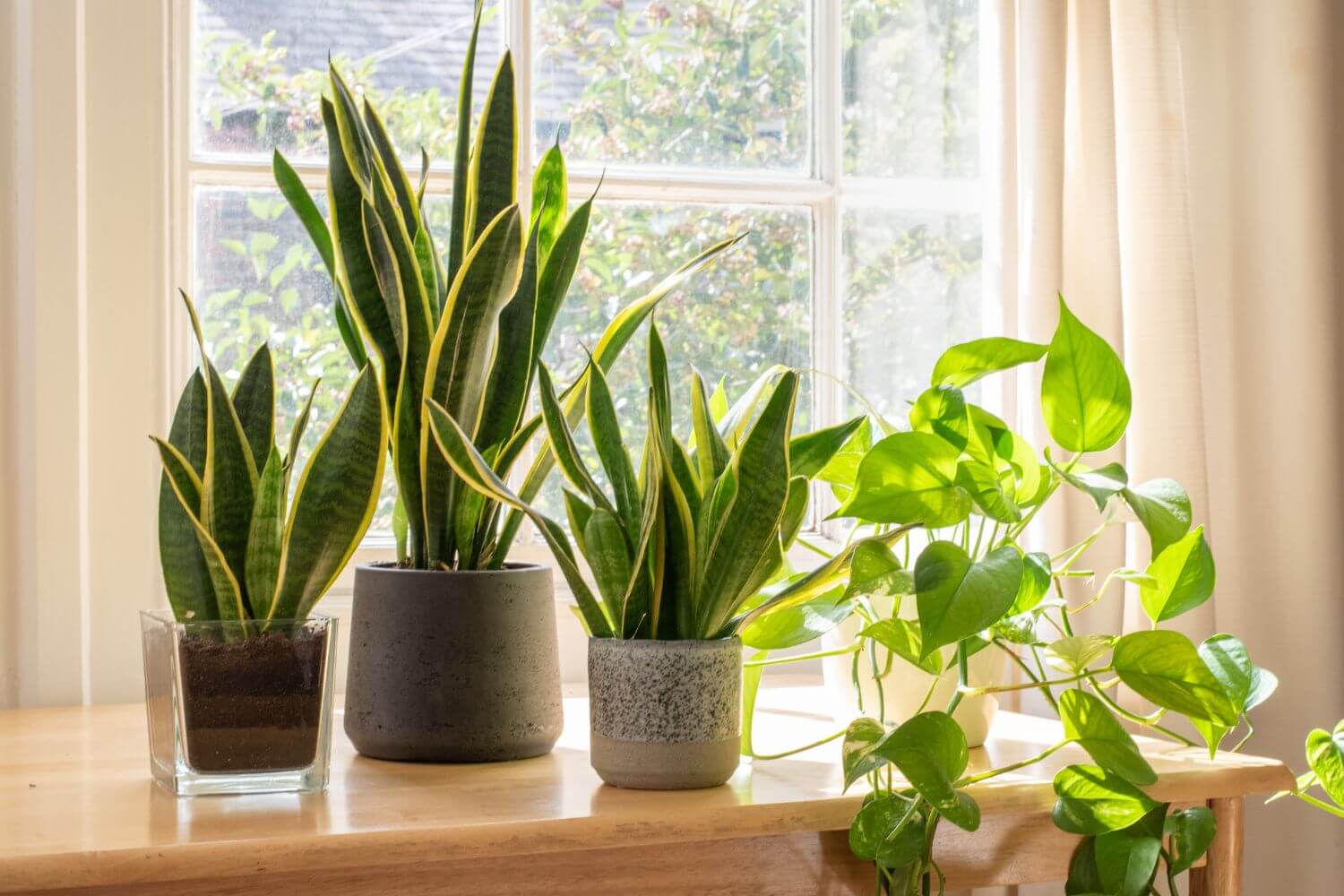
These plants actually like being a bit snug in their pots, so don’t rush to repot. Every 2-3 years is plenty, or when roots start peeking through drainage holes. Pick a pot just 1-2 inches wider than the current one, ensuring it has good drainage.
Fresh soil and a slightly larger home will give your plant room to grow while preventing water-logging issues. When repotting, take time to inspect the roots—trim any soft or dark sections to keep your plant healthy.
Overwintering
Snake plants need protection from cold temperatures, so bring outdoor plants inside before frost hits. Scale back watering and skip fertilizing during winter months when growth naturally slows. Keep temperatures above 50°F and shield from cold drafts to maintain those striking leaves through the cooler months.
How to Prune Snake Plant
While snake plants don’t need frequent pruning, occasional trimming helps maintain their sharp appearance. Using clean, sharp scissors, cut damaged or yellowing leaves at the base. For overgrown plants, remove older outer leaves to control size and encourage fresh growth from the center.
Blooming Period
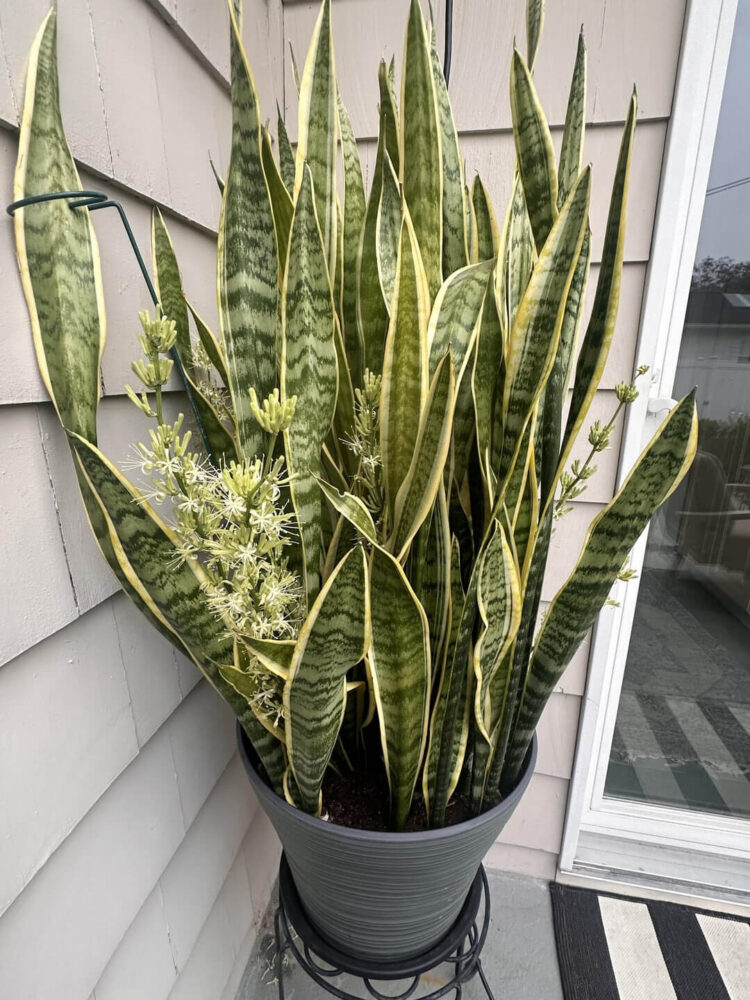
Your snake plant might surprise you with an unexpected display of delicate flowers during spring and summer. While flowering isn’t common for indoor plants, these rare blooms are worth watching for. The slender flower spikes stretch upward, reaching heights of up to 3 feet, and produce star-shaped white or cream-colored flowers.
These night-blooming beauties open in sequence from bottom to top, releasing a sweet fragrance reminiscent of vanilla or jasmine. While outdoor snake plants in their native habitat might flower yearly, indoor plants bloom less frequently. Your plant’s more likely to flower when it’s slightly root-bound or experiences subtle changes in its environment.
Common Problems With Snake Plant
Even these sturdy plants can face challenges. Let’s look at common issues and their solutions.
Pests and Diseases
While generally resistant to pests, snake plants occasionally attract unwanted visitors like spider mites, mealybugs, or scale insects. Regular leaf cleaning with a damp cloth helps prevent these issues. The biggest threat comes from root rot due to overwatering, so proper drainage and careful watering are essential for prevention.
Yellowing Leaves
When those striking leaves turn yellow, it’s usually a sign of overwatering. Check the soil moisture level and adjust your watering schedule—remember, these plants prefer dry conditions between waterings.
Brown Tips
Crispy brown tips often signal either underwatering or low humidity. Find the sweet spot in your watering routine, but don’t overcompensate—a slight increase in watering frequency usually solves the issue.
Curling Leaves
If you notice leaves curling inward, your plant’s telling you it’s thirsty. Give it a good drink, but maintain that crucial balance to avoid swinging too far in the opposite direction.
Slow Growth
A snake plant that’s not growing might need more light or nutrients. Consider moving it to a brighter spot or starting a regular fertilizing schedule during the growing season.
FAQ
In various cultures, snake plants symbolize good fortune and positive energy. While there’s no scientific backing for luck, their air-purifying abilities definitely create a healthier home environment.
Not at all! Snake plants make excellent houseplants, helping clean indoor air by removing common toxins. Just keep them away from curious pets and children since the leaves can cause mild discomfort if eaten.
No need to worry—snake plants don’t attract actual snakes. The name comes from their sleek, upright leaves that resemble snakes standing tall.
A spot with bright, indirect light brings out the best in these plants. They’ll manage in lower light conditions but grow faster and maintain better color in brighter spaces. Just avoid direct sunlight to prevent leaf damage.
