
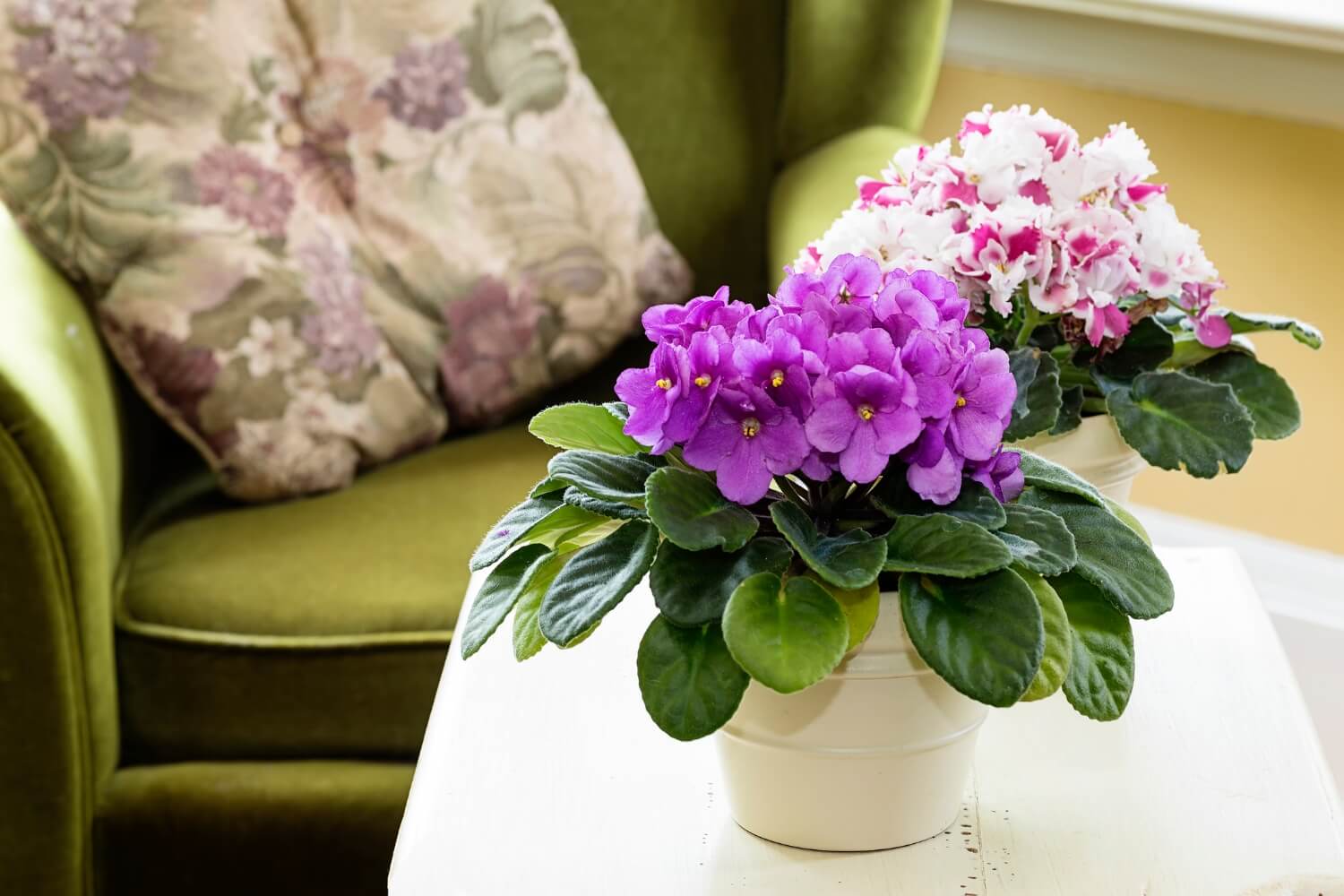
If you’re a plant enthusiast looking to add some color and charm to your indoor space, African violets might just be the perfect addition to your collection. These delicate and beautiful flowering plants are beloved for their vibrant blooms and ability to thrive in indoor environments. African violets are relatively easy to care for and propagate, making them an excellent choice for both experienced and novice gardeners.
Did you know African violets can live for up to 50 years? They are from Eastern Africa and are part of the Gesneriaceae family. African violets are small, pretty plants that bloom several times a year. You can find them in many sizes and colors. They have white, pink, maroon, and many other colored flowers.
Caring for your African Violets
Choosing the Right Location
African violets need the right spot to grow well. Light is very important for them. They like bright, indirect sunlight for 12 to 16 hours daily. Put them by an east- or north-facing window. Or, use fluorescent or LED lights if there’s not enough natural light.
These plants also like warm temperatures. Keep them between 60°F and 80°F (15°C to 26°C). Avoid cold drafts and hot radiators, as big temperature changes can hurt them.
Humidity is also crucial for African violets. They prefer 40% to 60% humidity. If your home is dry, group them together or use pebble trays with water. But, make sure the pot doesn’t touch the water, to avoid root rot. With the right light, heat, and humidity, your violets will flourish with beautiful flowers.
Potting and Soil Requirements
Choosing the right soil and pot is key for African violets. They need soil that drains well to avoid root rot. Most people use Miracle-Gro® Indoor Potting Mix for its good nutrients and drainage.
To make your own mix, use peat, perlite, and vermiculite equally. This mix holds moisture but lets extra water flow away. When it’s time to repot, pick a bigger pot than before. The pot should be about a third as wide as the plant to keep it healthy and small.
Knowing how to repot is important for your violets to live long. With good care, they can bloom for twenty years or more. When you repot, take the plant out gently, cut off dead roots, and put it in a new pot with fresh soil. This process helps the plants survive better, making sure they do well in a new pot.
Watering
African Violets need a special kind of care when it comes to watering. They are not like your average houseplants. Keeping them healthy means finding the right moisture balance.
One way to water them is with self-watering pots. These pots have a bottom part that lets out water slowly. This keeps the soil evenly moist.
For those who like to do things themselves, there’s the saucer method. Just put the plant in a dish of water for 45 minutes. It will soak up water from below.
Another good way to water is with a wicking system. With this, you use something like a cotton rope. It pulls water from a container to the plant as needed.
When it’s time to water, check the soil by poking your finger in. If it’s dry an inch down, it needs water. Use tap water that’s not too cold to avoid shock.
People often overwater African Violets, which is not good. Make sure the soil is damp, but not too wet. Keep an eye on how often you water to avoid problems. Adjust as you see fit to keep them happy.
Fertilizing and Feeding
To make African violets look great, give them the right food often. The best ratio of nutrients is 14-12-14 for them. This mix has what they need, like nitrogen. Make sure to choose a fertilizer just for African violets. Then, mix it in water at a quarter of the regular strength.
African violets need food regularly for good growth. Feed them every 4 to 6 weeks when they’re growing fast. When they start making buds, feed them every 2-3 weeks for more flowers. Liquid food works fast, while solid food gives slow release.
Don’t feed your African violets too much. Too many nutrients can harm them and make the soil look bad. But, not enough food will make their flowers dull. Watch out for signs like yellow leaves or dead parts if they need more nutrients.
Keep the soil’s pH right for your African violets. Too much urea in the food can hurt their roots. A mix with ammonium nitrate is better. If they’re not blooming well, try food with more phosphorus, like 8-14-9, for better color.
Also, flush the pots of your African violets regularly. This stops harmful salt build-up. Be careful if your water has a lot of chlorine, as this can hurt plants. Keep track of when you feed them to make sure they get the right amount of food.
Pruning and Maintenance
Keep your African violets healthy and beautiful with careful pruning and grooming. Start by snipping off any leaves that look dead or yellow. They’re usually at the bottom. This way, your plants will grow new leaves that are strong and fresh. Use tweezers or small pruners to take off these leaves. Be gentle so you don’t harm the good leaves.
Erase old flowers to keep your plant looking its best. Skilled gardeners often take off the buds to help the plant grow more leaves. Look at your violets once a week to see if there are any old flowers. If you find some, pluck them off.
Take out extra shoots to keep your violet’s shape neat and pretty. These extra shoots can mess up the way your plant’s leaves are arranged. Use tweezers or pruners to get rid of them. Do it gently to keep the main plant safe. This keeps your plant looking lovely and in shape.
Clean your plant’s leaves gently every now and then. This makes the plant look better and helps it breathe better. But, don’t wet the spot where the leaves meet the stem. This can cause problems like rot. If your violets are under lights, you can wash and put them back. But if they’re getting sunlight, wait for them to dry first.
Help your violets by rinsing their soil now and then. Pour clear water through the pot’s bottom. This stops harmful salts from building up. Using these care tips now and then will help your violets grow more flowers year after year.
Propagating African Violets
It’s easy and fun to make more African violets. You can do this from leaf cuttings or offsets. These new plants will look just like the one you started from. The best time to do this is in spring and summer. This is when it’s warmer and lighter.
To start with leaf cuttings, choose a healthy leaf. Cut it about an inch from the stem. Put it in a pot with good soil. Keep it in the light but not direct sunlight. It grows best when it’s warm, between 72°F to 80°F (22°C to 27°C).
For the water method, put the leaf in water. Make sure the stem is down in the water. You should see roots start in a few weeks. A new plant may come out in 4 to 6 weeks.
Most times, your new plants will look like the old ones. But, if the flower had a stripe, the new plant may not. Sometimes, new plants from the water start don’t look like the parent.
African violets also make little side plants you can grow on their own. This is faster than using leaf cuttings. Once they have a bunch of leaves, you can cut the big leaf off.
It takes time for new plants to grow, about three to four weeks. Then it can take six months to see flowers. But, when they bloom, you might get different colors than the one you started with.
Common African Violet Problems
African violets are hearty plants that love bright light. When they don’t get the right care, they can see some problems. For example, their leaves might start to curl if it’s too cold or they get too much sun. If the leaves are brown and crunchy, it could be from too much water or food.
Yellowing leaves
Yellow leaves can happen for different reasons. Too much water or if they’re just getting old. If the leaves start to droop, it might be from too little or too much water. Brown spots on the leaves might mean the water has chloramines.
Common Diseases and Pests
If you see white spots, it could be a sickness the plant caught in winter. To make your violet bloom, give it plenty of light at a cozy temperature. Keep the water just right, so the roots don’t get sick. When you water, do it from the top, bottom, or let the plant soak it up. Also, try to keep the nearby air moving to stop fungus.
If bugs like mealybugs or spider mites appear, use special soap to stop them. Always check your violet’s health and fix problems fast. This way, you’ll have beautiful blooms to enjoy all year long. The flowers come in many colors like white, pink, maroon, and even deep purple
FAQ
Repot your African violets with fresh soil once a year. Put them in a slightly bigger pot. They like being a bit crowded in their pots.
Good drainage is key for African violets. Use a soilless mix or mix perlite with commercial soil. This stops the roots from getting too wet.
Watch out for bugs like mealybugs, mites, aphids, and thrips. These can make your violets sick. Fungi can also be a problem. Make sure the air around your violets moves well. Don’t get their leaves wet. Use special soap or oil if you see bugs.
It’s best to keep the soil around your violets moist. But, don’t let them sit in water. Use a narrow-spouted watering can from the top. Or, put the pot in a dish of water until the top soil is wet.
