
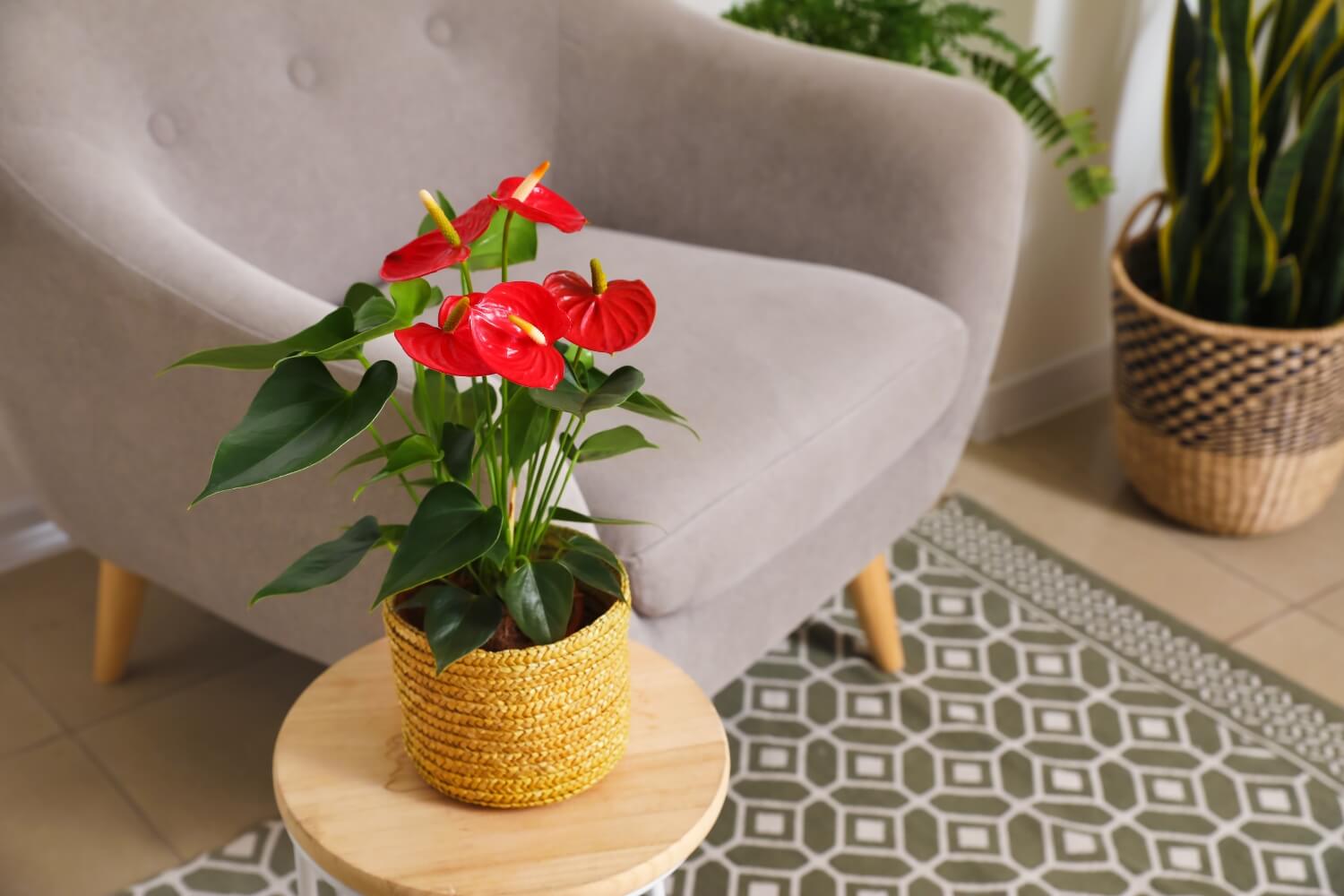
If you’re looking for a stunning, low-maintenance houseplant to brighten up your living space, look no further than the anthurium. With its glossy, heart-shaped leaves and vibrant, long-lasting flowers, this tropical beauty is sure to make a statement in any room. Not only are they eye-catching, but anthuriums are also relatively easy to care for, making them an excellent choice for both novice and experienced plant enthusiasts alike.
About Anthurium
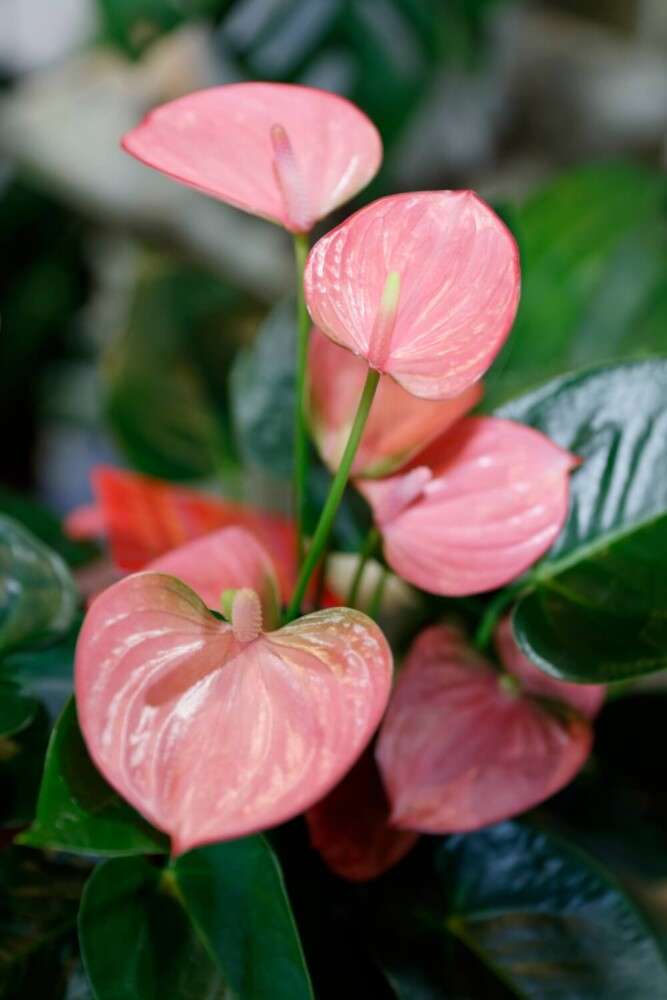
Native to the tropical rainforests of Central and South America, anthuriums are known for their distinctive, waxy flowers that come in a range of colors, including red, pink, white, and purple. However, what many people mistake for flowers are actually modified leaves called spathes, which surround the true flowers, the small spadix in the center.
Anthuriums are epiphytic plants, meaning they grow on other plants or trees in their natural habitat, drawing nutrients and moisture from the air and rain. This adaptation makes them well-suited for indoor growth, as they don’t require a lot of soil to thrive.
| Scientific Name | Anthurium spp. |
| Common Name | Flamingo Flower, Laceleaf |
| Origin | Central and South America |
| Plant Family | Araceae |
| Plant Type | Herbaceous perennial |
| Growth Habit | Upright, clumping |
| Hardiness Zones | USDA Zones 10-12 |
| Soil Type & pH | Well-draining, slightly acidic to neutral (5.5-6.5) |
| Sunlight | Bright indirect light |
| Toxicity | Toxic to pets and humans if ingested |
| Mature Size | 1-2 feet tall, 1-2 feet wide (varies by species) |
| Bloom Time | Year-round |
Types of Anthurium
There are over 1,000 species of anthurium, but only a few are commonly grown as houseplants. Some popular varieties include:
- Anthurium andraeanum – The most common type, with large, glossy leaves and red, pink, or white spathes.
- Anthurium scherzerianum – Features smaller, lance-shaped leaves and curly, red or orange spathes.
- Anthurium crystallinum – Known for its velvety, dark green leaves with prominent white veins.
- Anthurium clarinervium – Has thick, leathery leaves with distinctive, light green veins.

How to Care for Anthurium
Caring for your anthurium is relatively straightforward, as long as you provide the right conditions.
Sunlight
Anthuriums prefer bright, indirect light. They can tolerate some direct morning sun, but avoid exposing them to harsh afternoon rays, which can scorch their leaves. If your anthurium isn’t getting enough light, its leaves may become pale, and its growth may slow down.
Temperature & Humidity
As tropical plants, anthuriums thrive in warm, humid environments. Maintain a temperature range of 60-85°F (15-29°C) and a humidity level of 50-70%. If your home’s air is too dry, consider using a humidifier or placing a tray of water near your plant to increase moisture levels.
Water
Anthuriums prefer consistently moist soil, but be careful not to overwater them, as this can lead to root rot. Allow the top inch of soil to dry out between waterings, and ensure that the pot has proper drainage holes to prevent water from accumulating at the bottom.
Soil & Compost
Use a well-draining potting mix that’s rich in organic matter. You can create your own blend by combining equal parts peat moss, perlite, and orchid bark. This mixture will provide the necessary moisture retention and aeration for your anthurium’s roots.
Fertilizer
Feed your anthurium every 2-4 weeks during the growing season (spring through fall) with a balanced, water-soluble fertilizer diluted to half-strength. Avoid fertilizing during the winter months when growth slows down.
How to Propagate Anthurium
Propagating your anthurium is an easy and rewarding process. The most common method is division, which involves separating the plant into smaller sections, each with its own roots and leaves.
- Gently remove the anthurium from its pot and shake off excess soil to expose the roots.
- Identify natural divisions in the root system, where the plant can be easily separated.
- Using a clean, sharp knife or pruning shears, carefully cut through the roots to divide the plant into smaller sections.
- Plant each section in its own pot filled with fresh, well-draining potting mix.
- Water the newly potted divisions thoroughly and place them in a warm, humid location with bright, indirect light.
- Keep the soil consistently moist but not soggy, and your new anthuriums should establish themselves within a few weeks.

Potting and Repotting
Anthurium Anthuriums don’t require frequent repotting, as they prefer to be slightly root-bound. However, if you notice roots growing out of the drainage holes or the plant becoming top-heavy, it’s time to upgrade to a larger pot.
Choose a container that’s only one size larger than the current pot, ensuring it has proper drainage holes. Fill the bottom third of the new pot with fresh, well-draining potting mix, then gently remove your anthurium from its old pot and place it in the center of the new one. Fill in around the roots with additional potting mix, pressing down gently to remove any air pockets. Water the plant thoroughly and return it to its original location.
Pruning and Maintenance
Regular pruning helps keep your anthurium looking tidy and promotes healthy growth. Remove any yellowing, damaged, or dead leaves as they appear, cutting them off at the base of the stem with clean, sharp scissors. You can also trim off spent flowers to encourage the plant to produce more blooms.
Tips:
- Using clean, sharp scissors, cut off any yellowing, brown, or wilted leaves at the base of the stem.
- Always make clean cuts at a 45-degree angle to minimize the risk of infection.

Blooming Period
One of the most appealing aspects of anthuriums is their long-lasting, colorful blooms. In their natural habitat, they can flower year-round, but as houseplants, they typically bloom from late spring through fall.
The flowers, or spathes, are actually modified leaves that come in a range of colors, including red, pink, white, and purple. The true flowers are the small, spike-like structures called spadices that emerge from the center of the spathe.
To encourage more blooms, ensure your anthurium is getting enough bright, indirect light and feed it regularly with a balanced, water-soluble fertilizer during the growing season. Also, maintain a consistent watering schedule and keep the humidity levels high around your plant.
Overwintering
As tropical plants, anthuriums don’t have a true dormancy period. However, their growth may slow down during the winter months when light levels are lower and temperatures are cooler.
During this time, reduce watering slightly, allowing the top inch of soil to dry out between waterings. You can also cut back on fertilizing, as the plant won’t require as many nutrients while its growth is slowed.
Keep your anthurium in a warm, bright location, away from cold drafts and heating vents. If necessary, you can supplement natural light with artificial grow lights to maintain a consistent 12-14 hour photoperiod.

Common Pests and Diseases
While anthuriums are relatively resilient plants, they can still be susceptible to certain pests and diseases. Some common issues include:
Mealybugs
These small, white, cottony insects feed on the plant’s sap, causing leaf discoloration and stunted growth. Remove them manually with a cotton swab dipped in rubbing alcohol, or use an insecticidal soap spray.
Spider mites
These tiny arachnids create fine webbing on the undersides of leaves and cause stippling and discoloration. Increase humidity around your plant and treat with a neem oil or insecticidal soap spray.
Root rot
Overwatering or poor drainage can lead to fungal growth and root decay. Ensure your anthurium is planted in well-draining soil and avoid letting it sit in standing water. If root rot occurs, remove the affected roots and repot the plant in fresh soil.
Bacterial blight
This disease causes water-soaked spots on leaves that eventually turn brown and die. Remove infected leaves promptly and avoid getting water on the foliage when watering. Improve air circulation around your plant to reduce humidity.
Common Problems with Anthurium
Some common problems include:
- Yellowing leaves: This can be caused by overwatering, underwatering, or insufficient light. Adjust your watering schedule and ensure your plant is getting enough bright, indirect light.
- Brown leaf tips: This is often a sign of low humidity or inconsistent watering. Increase humidity around your plant by using a humidifier or placing a tray of water nearby, and maintain a consistent watering schedule.
- Lack of blooms: If your anthurium isn’t flowering, it may not be getting enough light or nutrients. Move it to a brighter location and feed it regularly with a balanced fertilizer during the growing season.
- Leggy growth: This occurs when the plant isn’t receiving enough light and stretches towards the nearest light source. Prune back leggy stems and move your anthurium to a brighter location to encourage bushier growth.
FAQ
Anthuriums are known for their stunning, long-lasting flowers that come in a range of vibrant colors. They are also relatively low-maintenance and adaptable houseplants, making them a popular choice for indoor gardeners.
Yes, anthuriums make excellent indoor plants. They thrive in the warm, humid conditions found in most homes and can tolerate lower light levels than many other flowering plants.
With proper care, anthuriums can live for many years as houseplants. Their blooms can last for several weeks to months, and the plants can flower year-round under the right conditions.
While some species of anthurium have a mild, sweet fragrance, the most common variety grown as a houseplant, Anthurium andraeanum, does not have a noticeable scent.
