

Dieffenbachia, also known as Dumb Cane, is a striking tropical houseplant that instantly adds a touch of the exotic to any indoor space. Native to Central and South America, this member of the Araceae family (which includes popular plants like Monstera and Philodendron) boasts large, eye-catching leaves.
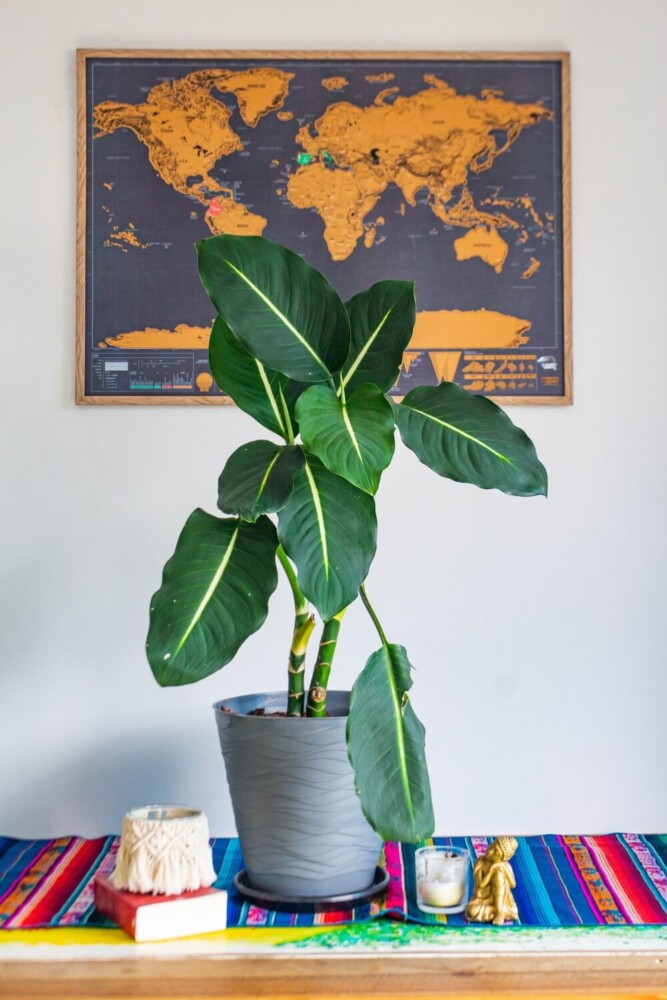
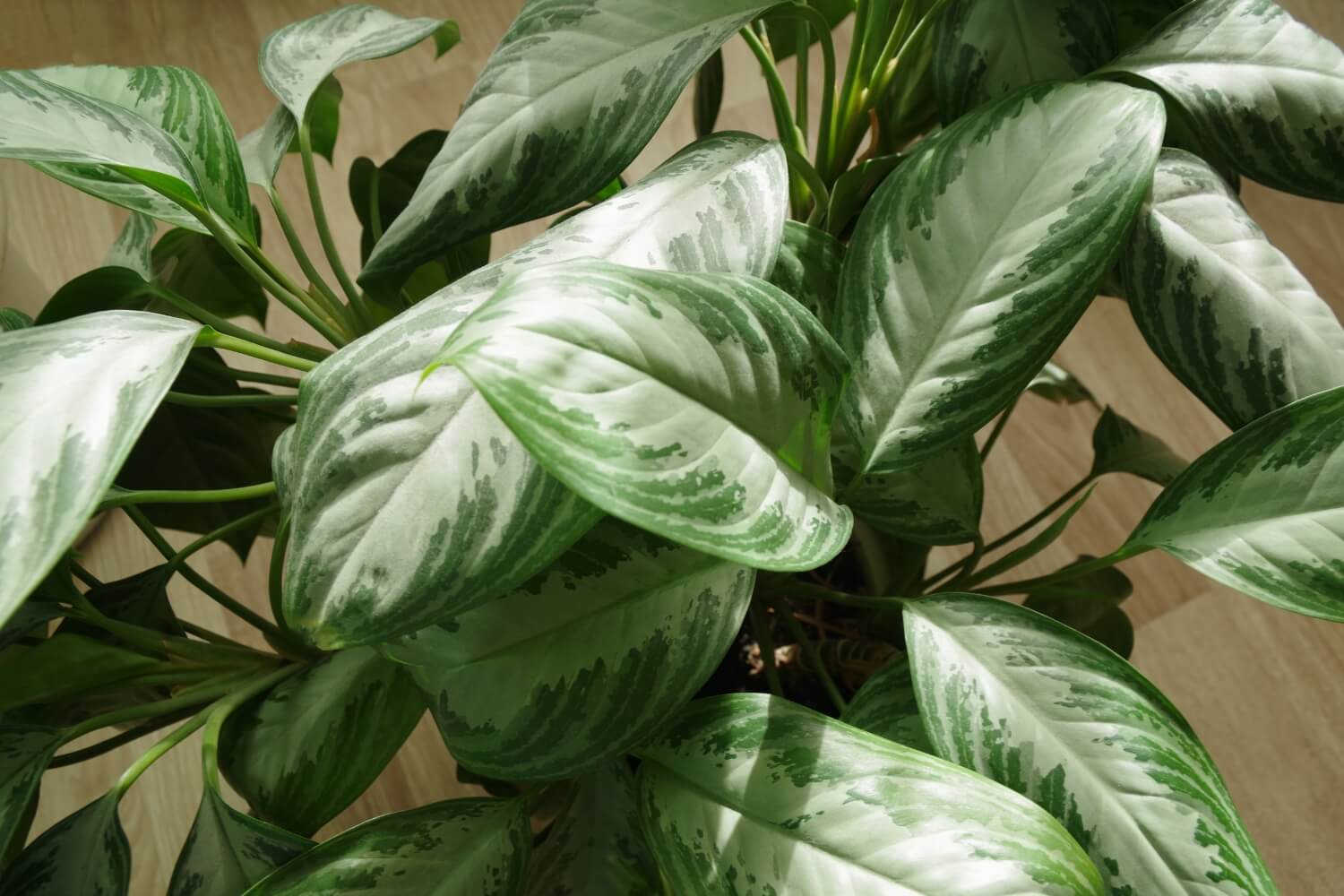
Dieffenbachia’s leaves are its main attraction, often growing up to a foot long or more. They feature beautiful variegation, showcasing patterns of green, white, and yellow that create stunning visual interest. Some varieties, like Dieffenbachia seguine, offer almost painterly splashes of color across their broad leaves.
This evergreen perennial can reach heights of up to five feet indoors, making it a great choice for a statement piece or to fill a corner with lush greenery. Its upright growth habit adds a tropical feel to your space, bringing a bit of the rainforest into your home.
| Scientific Name | Dieffenbachia spp. |
| Common Name | Dumb Cane, Mother-in-Law’s Tongue |
| Origin | Central and South America |
| Plant Family | Araceae |
| Plant Type | Herbaceous perennial |
| Growth Habit | Upright, clumping |
| Hardiness Zones | USDA 10-12 |
| Soil Type & pH | Well-draining, slightly acidic to neutral (6.1-7.5) |
| Sunlight | Bright, indirect light |
| Toxicity | Toxic to pets and humans if ingested |
| Mature Size | 3-6 feet tall, 1-3 feet wide |
| Bloom Time | Rarely flowers indoors |
How to Care for Dieffenbachia
Dieffenbachia plants are primarily grown as houseplants due to their preference for warm temperatures and indirect light. Choose a location with bright, indirect sunlight and avoid exposing the plant to direct rays, which can damage the foliage.
Select a well-draining pot with drainage holes and use a quality potting mix formulated for indoor plants. For optimal growth, consider planting or repotting your dieffenbachia during spring or summer.

Sunlight
Dieffenbachia prefers bright, indirect light. An east or west-facing window with light filtering through curtains or blinds offers ideal conditions. Avoid direct sunlight, as this can scorch the leaves.
Temperature & Humidity
Dieffenbachia does best in warm temperatures, ideally between 60 and 80 degrees Fahrenheit. It appreciates moderate to high humidity. If your home has dry air, consider using a humidifier or placing a tray of pebbles and water near the plant to increase moisture in the air.
Watering
Water your Dieffenbachia when the top inch of soil feels dry to the touch. Water thoroughly until excess water drains from the pot’s drainage holes. Avoid overwatering, which can lead to root rot. Reduce watering slightly during the winter months.
Soil & Compost
Use a well-draining potting mix. A combination of peat moss, perlite, and standard potting soil provides a suitable growing medium. Choose a pot with drainage holes to prevent waterlogging.
Fertilizer
Feed your Dieffenbachia with a balanced, water-soluble fertilizer diluted to half-strength once a month during the spring and summer growing seasons. Refrain from fertilizing during the winter dormancy period.
Types of Dieffenbachia
Several Dieffenbachia species are popular as houseplants due to their attractive foliage. Some of the most commonly cultivated include:
- D. seguine – This Brazilian species features large, ovate leaves with splashes of yellow or cream along the green margins. It can reach heights of up to 10 feet.
- D. oerstedii – Offers a diverse range of cultivars with varying leaf patterns. ‘Perfection’ exhibits intense variegation, while ‘Rudolph Roehrs’ features primarily yellow leaves with ivory accents. ‘Superba’ displays thicker leaves with white variegation.
- D. maculata – This species boasts large leaves (up to 20 inches) and can reach heights of 6 feet. The cultivar ‘Tropic Snow’ is particularly popular for its smaller size and increased variegation.
- D. amoena – May require occasional pruning to manage height and promote a fuller appearance. Use sterilized pruning shears to cut back the top portion of the plant, stimulating new growth from the base.

Important Note: All Dieffenbachia species contain calcium oxalate crystals in their sap, which are toxic upon ingestion. It is essential to handle these plants with care and place them out of reach of pets and children.
How to Propagate Dieffenbachia
Dieffenbachia plants are easily propagated using stem cuttings. Follow these steps for successful propagation:
- Using a clean, sharp knife or pruning shears, cut a healthy stem section measuring 4-6 inches. Make the cut just below a leaf node (where the leaf attaches to the stem).
- Remove the lower leaves from the cutting, leaving 2-3 leaves at the top.
- While not strictly necessary, dipping the cut end in rooting hormone can encourage faster root development.
- Prepare a small pot with moist, well-draining potting mix. Insert the cutting into the soil, ensuring the cut end is buried.
- Place the pot in a warm location with bright, indirect light. Maintain consistent soil moisture without overwatering.
Roots should develop within 4-6 weeks, followed by new growth.
How to Repot Dieffenbachia
Repot your Dieffenbachia every 1-2 years, or when it outgrows its current container. Choose a pot that is one size larger than the previous one and has proper drainage holes.
When repotting, gently remove the plant from its old pot and loosen any tangled roots. Place the plant in the new pot and fill in around the roots with fresh potting mix. Water thoroughly after repotting and keep the soil moist, but not soggy.
How to Prune Dieffenbachia
Pruning your Dumb Cane helps maintain its shape and encourages fuller growth. Use clean, sharp pruning shears to remove any yellow, brown, or damaged leaves as they appear. You can also trim back leggy stems to promote a bushier appearance.
If your Dieffenbachia becomes too tall, you can cut the main stem back to the desired height. New growth will emerge from the cut, creating a fuller plant.
Overwintering
As a tropical plant, Dieffenbachia does not require any special overwintering care. Simply maintain its regular care routine, providing bright, indirect light, warm temperatures, and reduced watering. Avoid placing the plant near cold drafts or heating vents during the winter months.
How to Get Dieffenbachia to Flower
Dieffenbachia rarely flowers indoors, as it requires specific conditions to produce blooms. The flowers, when they do appear, are small and insignificant compared to the plant’s foliage. Focus on providing the best care for your Dieffenbachia to maintain its lush, vibrant leaves.

Common Problems with Dieffenbachia
Pests and Diseases
Dieffenbachia plants are generally resistant to pests, however, they may occasionally encounter spider mites, especially in environments with low humidity. Horticultural oil and increased humidity can effectively address these infestations.
Additionally, dieffenbachia can be susceptible to bacterial rot or blight. This condition is often caused by overwatering and inadequate drainage. To prevent bacterial rot, allow the soil to dry slightly between waterings and ensure the pot has proper drainage holes to avoid excess moisture buildup.
Yellowing Leaves
Yellowing leaves can signal several issues, including overwatering, underwatering, low humidity, or nutrient imbalances. Evaluate your watering practices, ensuring proper drainage. If the soil seems consistently damp, reduce watering frequency. If it feels dry, water more thoroughly. Consider using a humidifier if low humidity is a concern.
Brown Leaf Tips
Brown leaf tips often indicate low humidity, over-fertilization, or exposure to drafts. Increase humidity with a humidifier or pebble tray, and assess your fertilizing routine. Protect your plant from cold drafts to prevent further damage.
Drooping Leaves
Drooping leaves may be a sign of underwatering or low humidity. Check the soil moisture and water when the top inch feels dry. Increase humidity levels around the plant to help prevent drooping leaves.
FAQ
Yes, Dieffenbachia contains calcium oxalate crystals, which can cause irritation and swelling if ingested. Keep the plant away from children and pets.
No, Dieffenbachia cannot be propagated from leaf cuttings. Instead, use stem cuttings that include a leaf node for successful propagation.
To promote bushier growth, pinch back or prune the top of the plant. This will encourage the plant to produce new shoots and create a fuller appearance.
Dieffenbachia is typically grown as a houseplant, but it can be grown outdoors in USDA hardiness zones 10-12. Ensure the plant is protected from direct sunlight and cold temperatures.
