
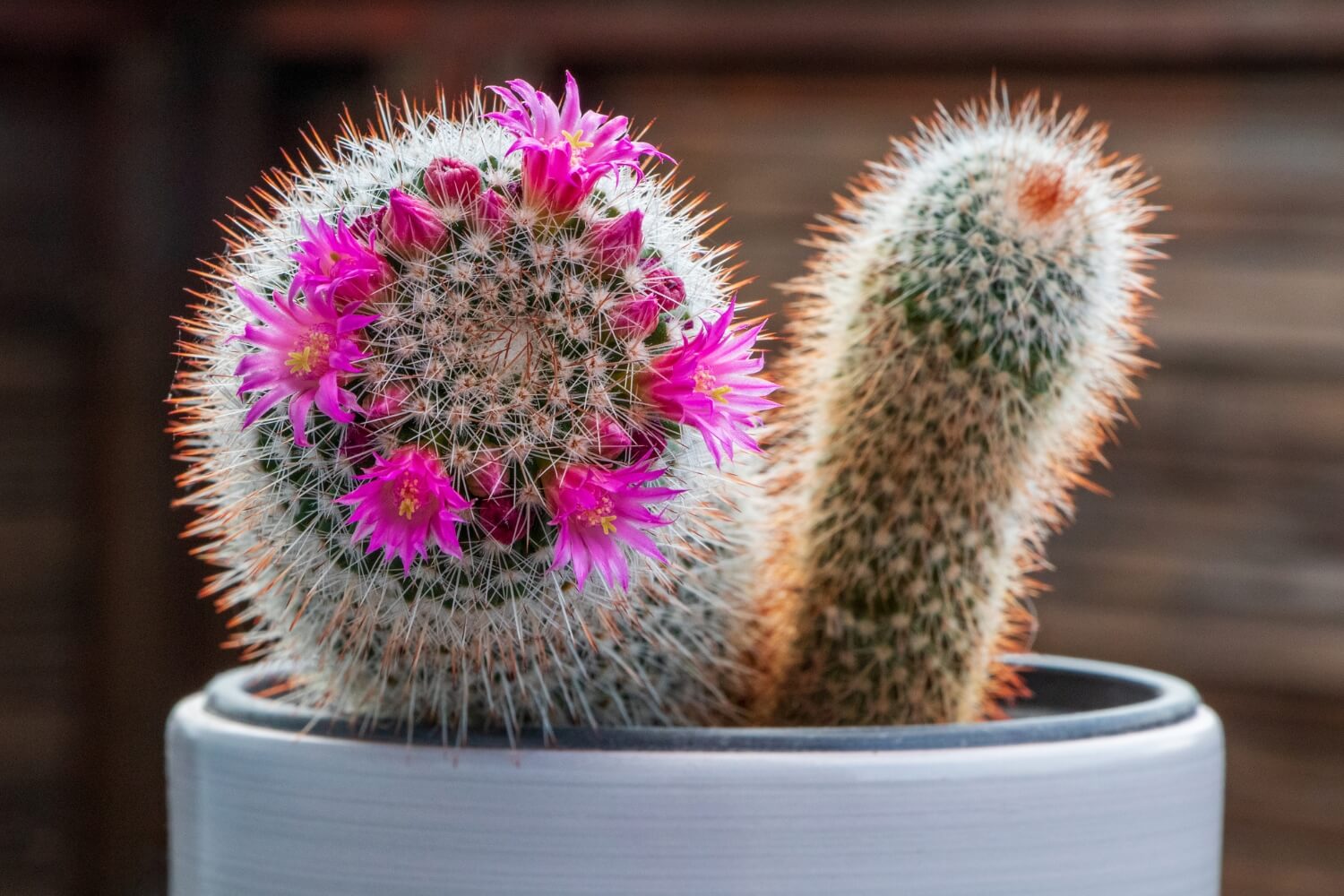
Mammillaria, with its captivating round shape and striking spines, stands out as a delightful addition to any plant collection. This genus of cacti, native to Mexico and parts of the southwestern United States, boasts over 200 species, each with its unique charm. From the woolly old lady cactus to the feathery pincushion varieties, Mammillarias offers a diverse range of textures and colors that will catch your eye and spark your curiosity.
| Scientific Name | Mammillaria |
| Common Name | Pincushion Cactus, Fishhook Cactus |
| Plant Family | Cactaceae |
| Plant Type | Succulent |
| Growth Habit | Low-growing, clustered |
| Hardiness Zones | 9-11 |
| Soil Type & pH | Well-draining, slightly acidic to neutral |
| Sunlight | Bright, direct light |
| Toxicity | Non-toxic |
| Mature Size | 5-60 cm (2-24 inches) tall |
| Bloom Time | Spring to summer |
Caring for Mammillaria
Mammillarias thrive with minimal care, making them the perfect houseplant for any home. These cacti prefer bright, direct light and well-draining soil. Water sparingly, allowing the soil to dry completely between waterings. Provide warm temperatures and moderate humidity for optimal growth.

Light Conditions
Mammillarias love basking in bright, direct sunlight. Place your cactus near a south-facing window where it can soak up plenty of rays throughout the day. If you notice the plant stretching or becoming pale, it’s likely not receiving enough light. In this case, consider supplementing with grow lights or moving it to a brighter spot.
Temperature & Humidity
These hardy cacti prefer warm temperatures between 70-80°F (21-27°C) during their active growing season. In winter, they can tolerate cooler temperatures, but keep them above 50°F (10°C) to prevent damage. Mammillarias aren’t particularly fussy about humidity, but they do appreciate good air circulation to prevent fungal issues.
Watering Needs
When it comes to watering your Mammillaria, less is more. These cacti have adapted to survive in arid conditions and are prone to root rot if overwatered. During the growing season (spring and summer), water thoroughly when the soil has completely dried out. In winter, reduce watering to once a month or less, depending on your home’s conditions.
Soil & Compost
Mammillarias require well-draining soil to thrive. A commercial cactus mix works well, or you can create your own by combining regular potting soil with coarse sand and perlite. This mixture ensures excess water drains quickly, preventing the roots from sitting in moisture.
Fertilizer
Feed your Mammillaria sparingly during the growing season. Use a balanced, water-soluble fertilizer diluted to half-strength once a month. Avoid fertilizing during the winter months when the plant is dormant.
Types of Mammillaria
The Mammillaria genus boasts a wide variety of species, each with its unique characteristics. Some popular types include:
- Old Lady Cactus (Mammillaria hahniana) – Known for its woolly appearance and pink flowers.
- Feather Cactus (Mammillaria plumosa) – Features soft, feathery spines that give it a fluffy look.
- Golden Stars (Mammillaria elongata) – Produces clusters of cylindrical stems with golden-yellow spines.
- Powder Puff Cactus (Mammillaria bocasana) – Covered in fine, hair-like spines that create a soft, fuzzy appearance.
How to Propagate Mammillaria
Propagating Mammillaria is a rewarding process that allows you to expand your collection or share these charming cacti with friends. The most common method is through offsets or “pups” that grow around the base of the mother plant.
To propagate, gently remove an offset that’s at least 2 inches in diameter. Allow the cut end to callus over for a few days, then plant it in a well-draining cactus mix. Water sparingly until roots develop, which usually takes a few weeks.
You can also propagate Mammillarias from seeds, although this method requires more patience. Sow the seeds in a sterile, well-draining medium and keep them warm and slightly moist until germination occurs.

Potting & Repotting Mammillaria
Mammillarias prefer to be slightly root-bound, so they don’t require frequent repotting. Choose a pot that’s only slightly larger than the root ball, with drainage holes to prevent water accumulation. Terracotta pots are ideal as they allow excess moisture to evaporate through the sides.
Repot your Mammillaria every 2-3 years or when it outgrows its current container. The best time to repot is in spring, at the beginning of the growing season. Gently remove the plant from its pot, shake off excess soil, and inspect the roots for any signs of rot or damage. Trim any unhealthy roots before replanting in fresh cactus soil.
Overwintering
Mammillarias enter a period of dormancy during winter, requiring different care than during their active growing season. Reduce watering significantly, allowing the soil to dry out completely between waterings. Move your cactus to a cooler location, ideally between 50-60°F (10-15°C), to encourage dormancy.
Protect your Mammillaria from frost if you’re growing it outdoors in cooler climates. Consider bringing potted specimens indoors or providing protection with frost cloth or a cold frame.
How to Prune Mammillaria
Pruning isn’t typically necessary for Mammillarias, as they naturally maintain a compact shape. However, you may want to remove dead or damaged parts to keep the plant healthy and attractive. Use clean, sharp scissors or pruning shears to cut off any brown or shriveled sections at the base.
If your Mammillaria becomes too large or develops an uneven shape, you can prune it back. Make clean cuts at the joints between segments, always wearing thick gloves to protect yourself from the spines.
Blooming Period
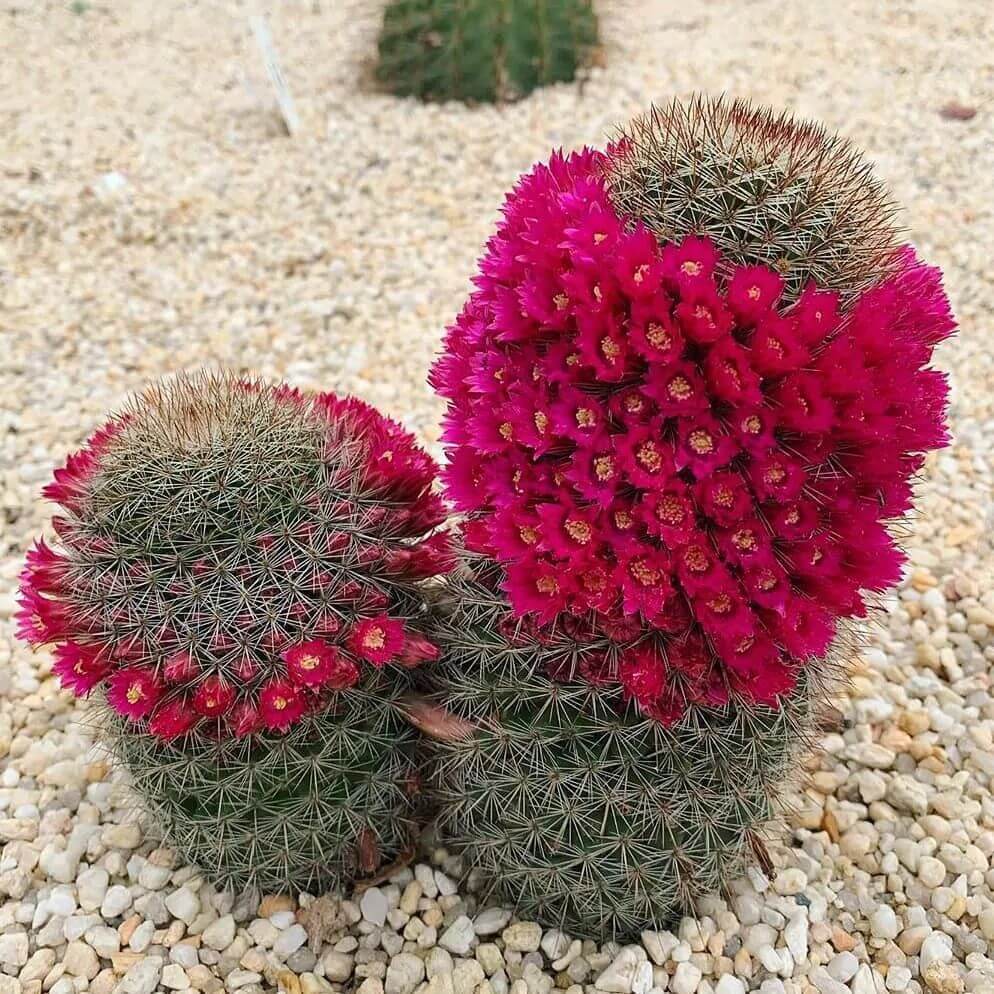
Mammillarias typically bloom in spring and early summer, producing small, funnel-shaped flowers in rings around the plant. The flowers come in various colors, including pink, red, yellow, and white, depending on the species. To encourage blooming, provide your cactus with a period of cooler temperatures and reduced watering during winter dormancy.
Common Problems With Mammillaria
Pests and Diseases
Pests can occasionally bother Mammillarias, with mealybugs and spider mites being the most common culprits. Mealybugs appear as small, white, cottony masses on the plant, while spider mites cause a fine webbing between the spines. Treat infestations promptly with insecticidal soap or neem oil, being careful not to oversaturate the plant.
Fungal diseases
Fungal diseases can develop in overly humid conditions or if water is allowed to sit on the plant’s surface. These often appear as dark spots or patches on the cactus. Improve air circulation around the plant and avoid getting water on the body of the cactus when watering to prevent fungal issues.
Overwatering
While Mammillarias are generally hardy plants, they can face a few issues if not cared for properly. Overwatering is the most common problem, leading to root rot and eventual plant death. Signs of overwatering include yellowing or softening of the stem, and a mushy base. To prevent this, always ensure the soil dries out completely between waterings and use a well-draining potting mix.
Sunburn
Sunburn can occur if a Mammillaria is suddenly exposed to intense, direct sunlight after being in lower light conditions. This appears as brown or yellow patches on the plant’s surface. To prevent sunburn, gradually acclimate your cactus to brighter conditions over a period of several weeks.
FAQ
Mammillarias can be grown both indoors and outdoors, depending on your climate. They make excellent houseplants due to their compact size and low maintenance requirements. In regions with mild winters (USDA zones 9-11), they can be grown outdoors year-round.
Mammillaria species vary greatly in size. Some species remain small, reaching only 5 cm (2 inches) in height, while others can grow up to 60 cm (24 inches) tall. Most commonly cultivated species typically stay under 30 cm (12 inches) in height.
With proper care, Mammillarias can live for several decades. Some specimens in cultivation have been known to survive for 50 years or more. Their longevity depends on factors such as growing conditions, care, and the specific species.
Many Mammillaria species are self-fertile, meaning they can produce seeds without cross-pollination from another plant. However, cross-pollination often results in better seed production and genetic diversity. Some species may require cross-pollination to set seed.
